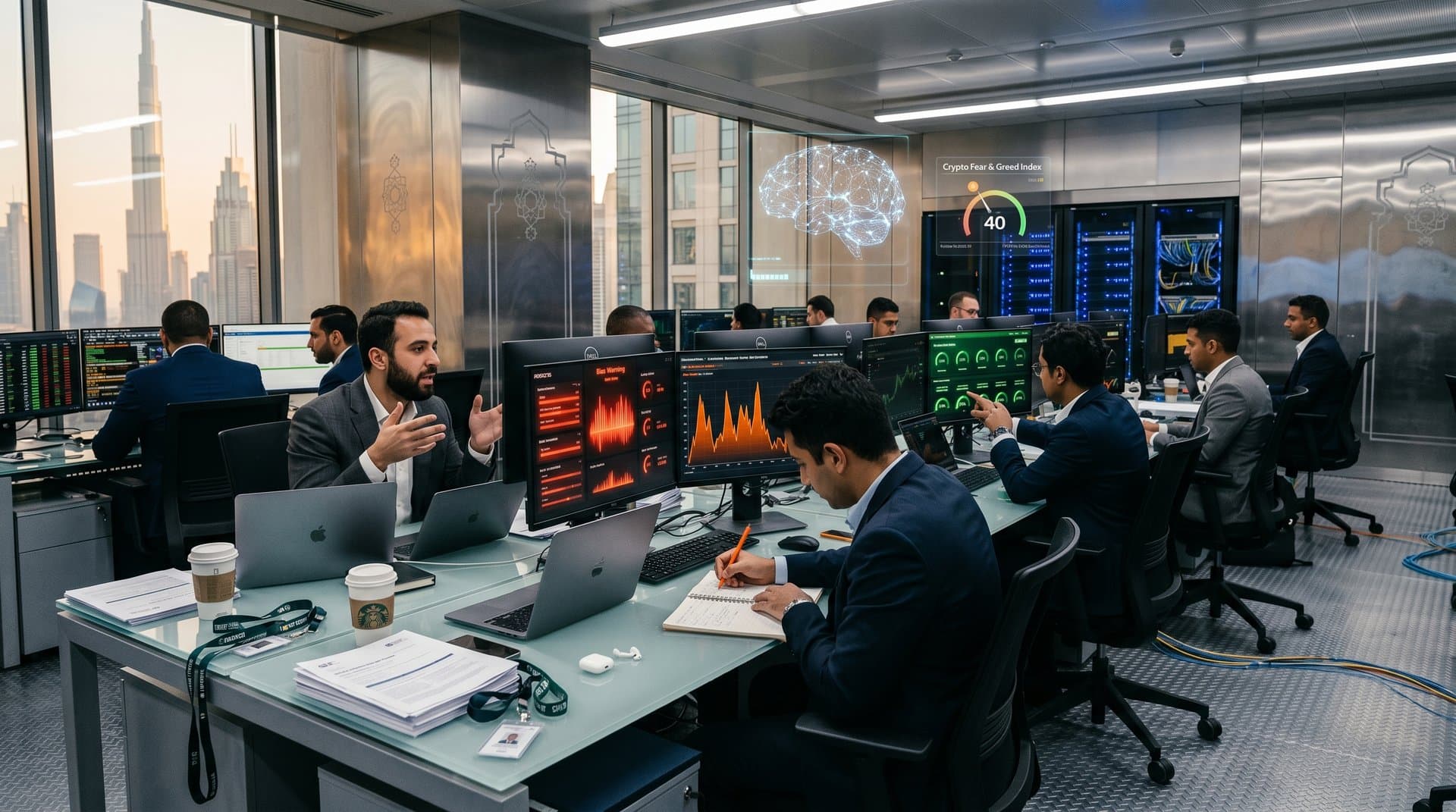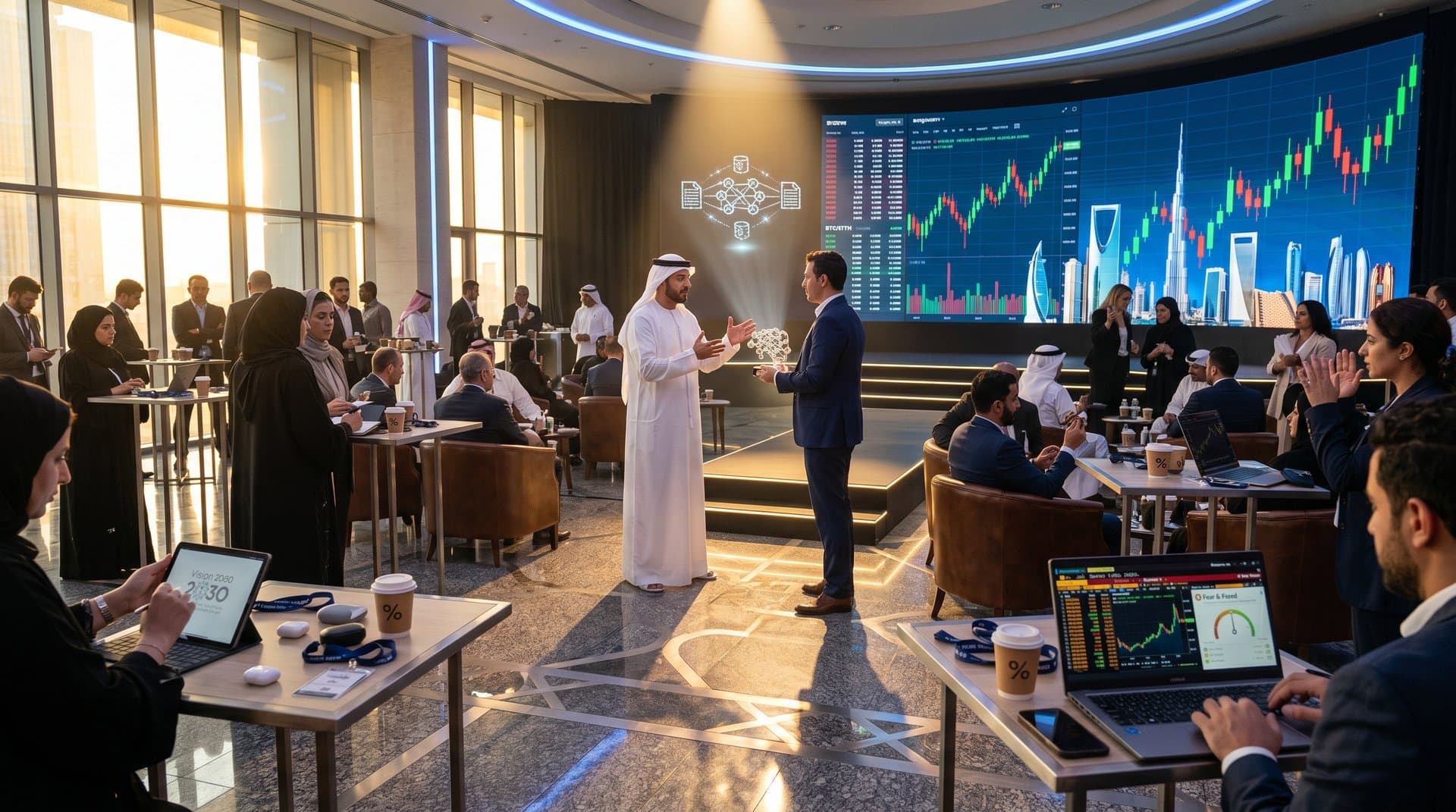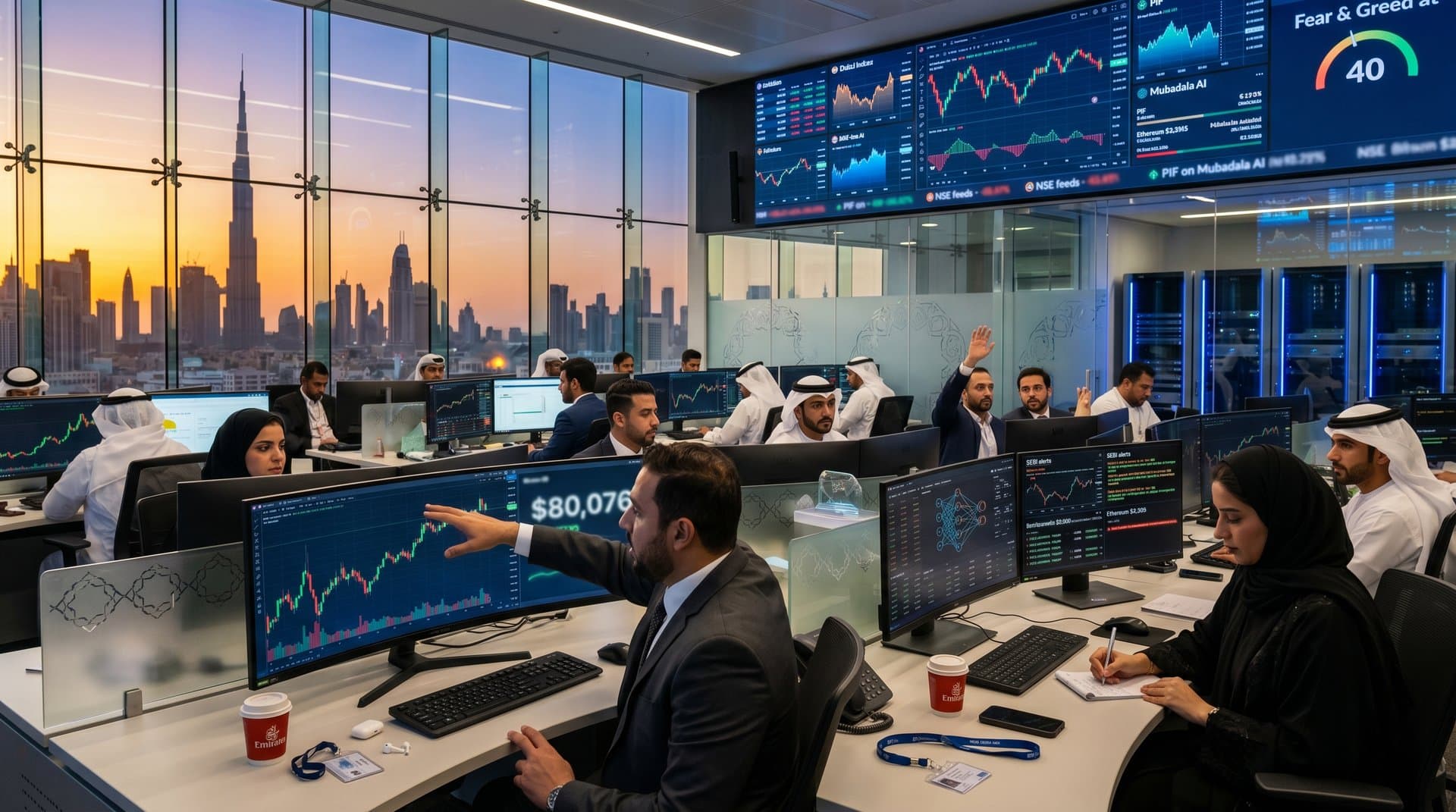
- SEBI AI risks advisory prompts 15% cuts in Gulf funds' $500M India AI stakes.
- Bitcoin holds at $80,076 USD with Fear & Greed Index at 40 amid volatility.
- Gulf shifts to hybrid AI models, aligning ADGM and SDAIA with SEBI standards.
SEBI's AI risks advisory, due within weeks, drives Gulf sovereign funds to cut 15% from their $500 million USD India tech stakes. The guidance targets algorithmic trading biases and volatility amplifiers (SEBI Chairman Madhabi Puri Buch, October 2024).
Mubadala Investment Company holds stakes in 12 Indian AI fintech firms, per its official technology portfolio. Saudi PIF invests in Mumbai-based machine learning platforms. These exposures now face scrutiny.
Bitcoin trades at $80,076 USD, up 1.4% over 24 hours (CoinMarketCap, October 10, 2024). Its $1,602.5 billion USD market cap reflects resilience. The Crypto Fear & Greed Index sits at 40, indicating fear (Alternative.me, October 10, 2024).
Gulf Funds Reassess India AI Exposure
India's tech sector attracts $200 billion USD in commitments, with AI powering 25% of new unicorns (NASSCOM Tech Startup Report 2024). SEBI targets model opacity and herding effects that crash prices. Mubadala demands compliance upgrades from partners.
Dubai's DIFC Innovation Hub uses Bengaluru AI for trade execution. These systems handle millions of daily orders. SEBI's transparency rules hit Gulf operations directly.
UAE's ADGM enforces AI ethics on licensed firms. Saudi SDAIA sets trustworthy AI standards. Only 40% of Gulf AI tools provide full audit trails (GCC Fintech Report 2024).
Crypto Markets Signal Stability Amid Shifts
- Asset: BTC · Price (USD): 80,076 · 24h Change: +1.4% · Market Cap (B USD): 1,602.5
- Asset: ETH · Price (USD): 2,355.16 · 24h Change: +1.0% · Market Cap (B USD): 284.1
- Asset: XRP · Price (USD): 1.39 · 24h Change: +0.0% · Market Cap (B USD): 86.1
- Asset: SOL · Price (USD): 84.16 · 24h Change: -0.3% · Market Cap (B USD): 48.5
Bitcoin's hold at $80,076 USD shows institutional calm despite regulations.
Core AI Risks in SEBI's Advisory
SEBI addresses AI front-running from public data. Simulations show models erasing 5% from indices in seconds (SEBI internal simulations, 2024). Data poisoning warps predictions.
Riyadh's Tadawul uses similar AI for oil futures. NEOM pulls Indian APIs for modeling. Explainable AI tools like SHAP raise costs 20-30% (Deloitte AI Governance Report 2024).
Dubai Silicon Oasis engineers tune networks on NSE data. Backtests hit 72% accuracy on ETH above $2,355 USD. Latency issues spur SEBI reforms.
SEBI's January 2024 papers mandate disclosures and certifications. They mirror EU AI Act and MiCA timelines (2024-2026).
Compliance Accelerates Across GCC
QIA teams with Hyderabad labs on Islamic finance AI. GCC-India alignment eases barriers. Bahrain Central Bank tests AI sandboxes; SAMA advances pilots.
DIFC firms lag at 35% AI compliance (DIFC Innovation Survey 2024). Vendors like Fractal Analytics face audits. Gulf investors build hybrid local models.
SEBI's Q2 2026 rollout influences ADGM checks. PIF reallocates 15% of its $500 million USD AI fund (PIF quarterly report, 2024). Solana dips to $84.16 USD. South Korea's FSC offers options; Gulf funds diversify while converging regulations.
Frequently Asked Questions
What AI risks does the SEBI AI risks advisory target?
SEBI focuses on algorithmic biases, model opacity, front-running, and herding effects (NASSCOM 2024).
How does the SEBI AI risks advisory impact Gulf funds?
PIF and Mubadala review stakes, reallocating 15% of $500M AI fund for compliance (PIF 2024).
Which Gulf regulations align with SEBI AI risks advisory?
ADGM AI ethics and SDAIA standards mandate audits similar to SEBI's explainable AI requirements.
Why do India AI rules matter to Gulf investors?
India supplies AI tools to DIFC and Tadawul; SEBI hikes costs, spurring diversification.