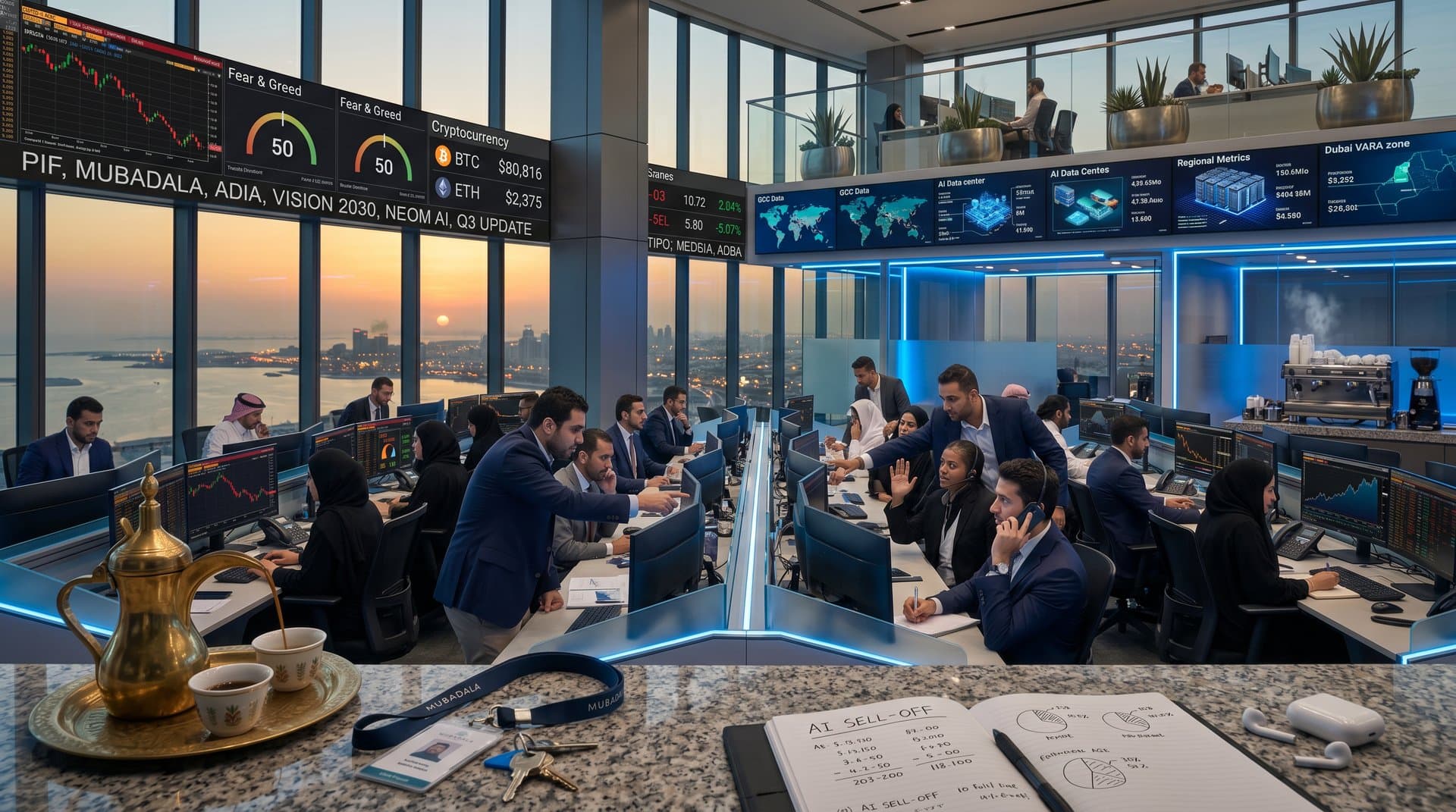
- Bitcoin trades at $81,032.00 with +0.2% change per CoinGecko data.
- Fear & Greed Index registers 48, signaling neutral investor sentiment.
- XRP rises 2.0% to $1.45 amid stable crypto markets supporting Gulf tech investments.
AI-powered airway prediction models leveraging CT radiomics now enable precise identification of difficult intubation risks from routine scans. Anesthesiology News highlights this breakthrough. Gulf surgical hubs like Cleveland Clinic Abu Dhabi integrate such tools to safeguard patients in high-volume elective procedures. Dubai Healthcare City processes thousands of international cases annually, where anesthesia safety drives repeat visits. Mubadala-backed facilities pioneer the shift. This non-invasive method extracts image features for machine learning classifiers, outperforming traditional assessments like Mallampati scores.
In the radiology suite at Cleveland Clinic Abu Dhabi, screens glow with 3D airway reconstructions under recessed LEDs. Frosted glass partitions frame consultants huddled over diagnostic consoles. Beyond floor-to-ceiling windows, the skyline signals a region blending heritage with innovation.
Radiologists feed CT data into AI pipelines daily. Algorithms analyze textures and shapes invisible to the human eye. Anesthesiologists gain actionable insights before surgery begins.
Why Is Airway Prediction Critical for Gulf Surgical Hubs?
Difficult airways complicate 1-5% of intubations worldwide, but Gulf hubs handle complex cases from medical tourists seeking cosmetics, orthopedics, and bariatrics. Cleveland Clinic Abu Dhabi and Burjeel Holdings lead in elective volumes. AI prediction mitigates risks in these high-stakes environments.
Traditional methods rely on visual exams prone to subjectivity. CT radiomics delivers objective metrics. Surgeons at King Fahd Medical City in Riyadh now anticipate challenges preoperatively.
Patient trust rises. Expats and visitors choose Gulf centers for precision care.
This technology aligns with Vision 2030 diversification. Saudi Arabia builds medical cities alongside NEOM. UAE positions Dubai as a wellness capital.
How Does CT Radiomics Power AI Airway Prediction?
CT radiomics extracts quantitative features from scans — intensity histograms, gray-level co-occurrence matrices, shape descriptors. Software like PyRadiomics processes thousands per image. Machine learning models, from random forests to neural networks, classify risk levels.
Preoperative chest or neck CTs, standard for many surgeries, supply the data. No extra radiation exposes patients. Models train on diverse datasets capturing ethnic variations prevalent in Gulf populations.
Integration with PACS systems streamlines workflows. Radiologists flag high-risk airways instantly. Anesthesiologists adjust plans — video laryngoscopes or fiberoptic tools at hand.
Gulf developers customize models for regional demographics. Emirati and Saudi researchers collaborate with global firms.
What Does AI Airway Prediction Mean for Gulf Medical Tourism?
Medical tourism fuels Gulf economies. UAE clinics draw patients from Europe and Russia for affordability and luxury. Saudi facilities target Asia and Africa.
Safer anesthesia draws premium clients. Elective procedures boom in Riyadh Season venues and Abu Dhabi wellness resorts. AI reduces complications, shortens stays, cuts costs.
Tourists blend surgery with culture — souks, festivals, beaches. Hospitals offer VIP suites with sea views. This tech elevates the experience.
Cultural sensitivity shapes care. Islamic values prioritize life preservation. AI upholds that ethos through prevention.
Technology and Finance Angle: Stable Markets Support Gulf Health AI Investments
Gulf sovereign wealth funds eye AI health tech. Mubadala invests in digital diagnostics. PIF funds startups via Sanabil. ADIA explores precision medicine.
Crypto markets provide context. CoinGecko data shows Bitcoin at $81,032.00 (+0.2%). Ethereum trades at $2,332.62 (+0.4%). XRP hits $1.45 (+2.0%). Fear & Greed Index sits at 48 (Neutral).
Dubai's VARA regulates crypto, channeling capital to tech. Stable sentiment favors health AI over volatile assets. Funds diversify into radiomics platforms.
Reuters reports on UAE expansions. Financial Times covers Saudi health investments. Neutral markets signal opportunity.
BNB stands at $654.50 (+0.7%). USDT pegs at $1.00. On-chain metrics indicate institutional inflows.
Gulf's Cultural Shift Through Health Innovation
Artists and curators note the human side. Wellness festivals in Alserkal Avenue now feature health tech demos. Riyadh's Boulevard World hosts AI health talks.
Chefs craft post-op nutrition menus blending Emirati dates with Japanese precision. This fusion mirrors cultural evolution.
Gulf residents embrace tech. Women-led clinics pioneer women-only suites with AI safety nets.
The region rewrites its narrative — from oil to innovation. A first AI airway symposium convenes in Doha next year.
Widespread adoption separates enhanced tourism revenues from persistent safety gaps.
Frequently Asked Questions
What is AI-powered airway prediction using CT radiomics?
AI-powered airway prediction employs CT radiomics to extract image features like textures and shapes for machine learning models that forecast difficult intubations. Routine preoperative CT scans provide data without added radiation. This outperforms subjective clinical assessments in precision.
How does AI-powered airway prediction benefit Gulf medical tourism?
AI-powered airway prediction enhances anesthesia safety in high-volume elective surgeries at hubs like Cleveland Clinic Abu Dhabi. Medical tourists favor Gulf centers for reduced risks in cosmetics and orthopedics. Shorter stays and fewer complications boost economic impact.
What role does radiomics play in airway assessment?
Radiomics quantifies hundreds of features from CT images, including first-order statistics and texture matrices. AI classifiers process these for risk scores. Gulf hospitals integrate it with PACS for seamless workflows.
Why invest in CT radiomics for Gulf surgical hubs?
CT radiomics supports Vision 2030 goals by attracting premium patients to UAE and Saudi facilities. Sovereign funds like Mubadala back such tech. Stable markets with BTC at $81,032 encourage diversification into health AI.