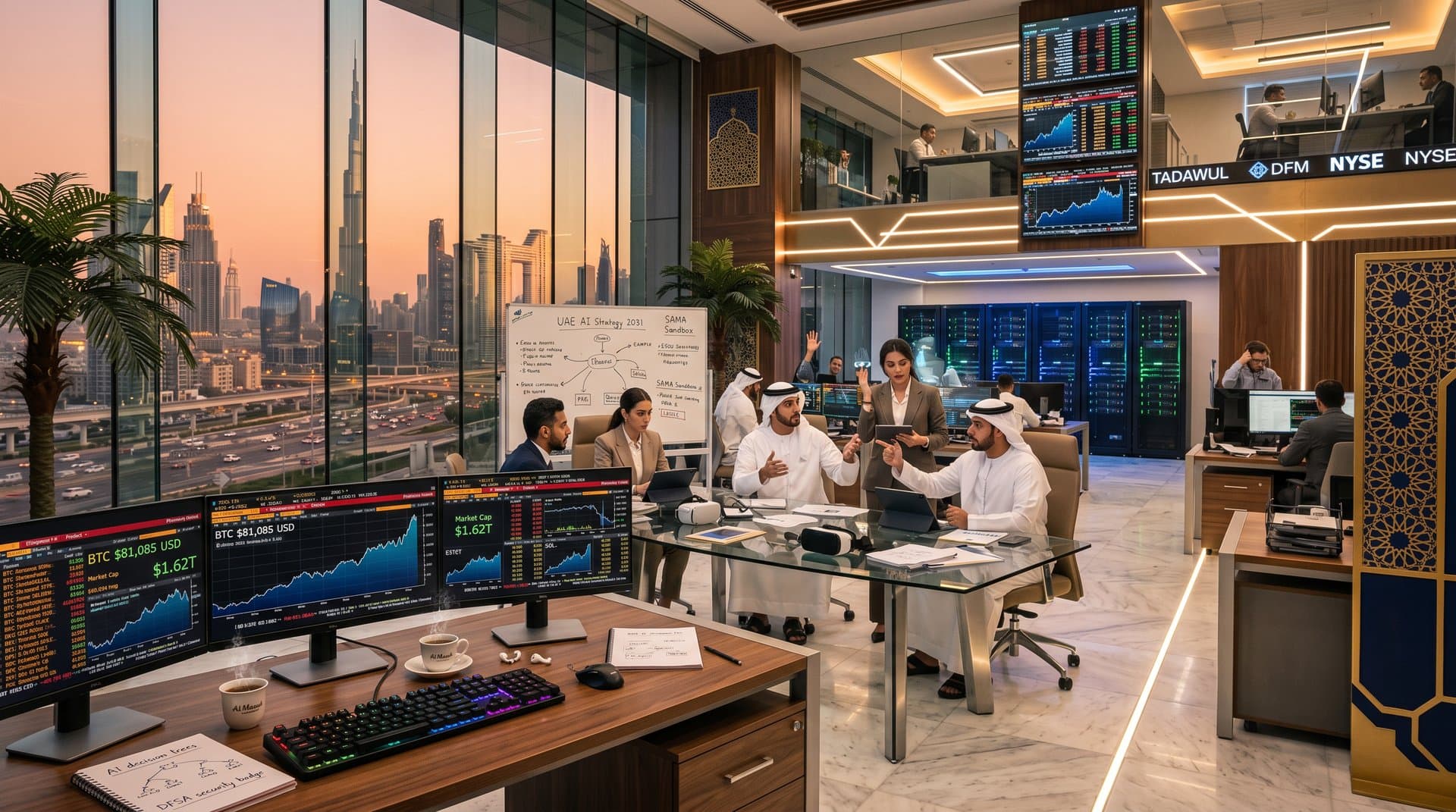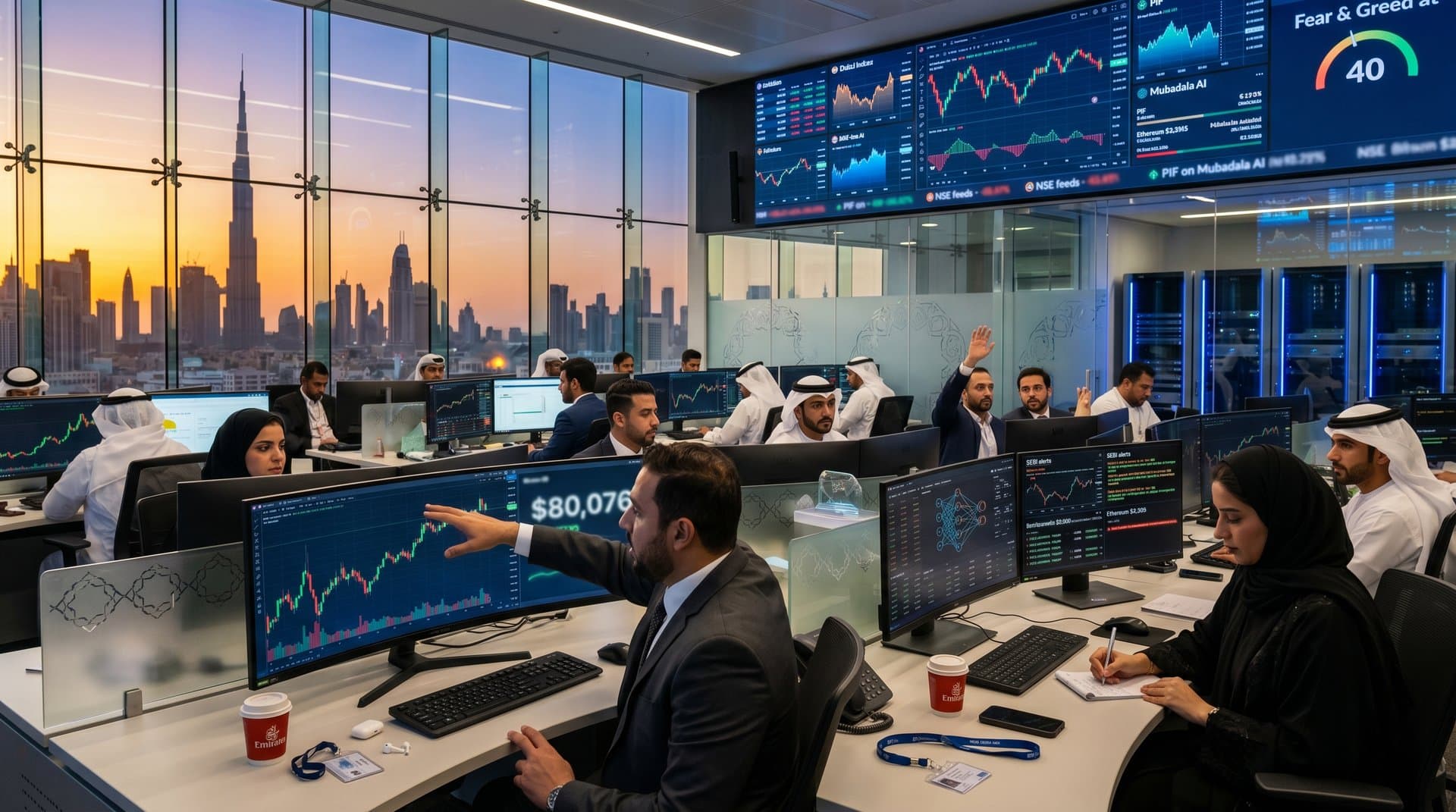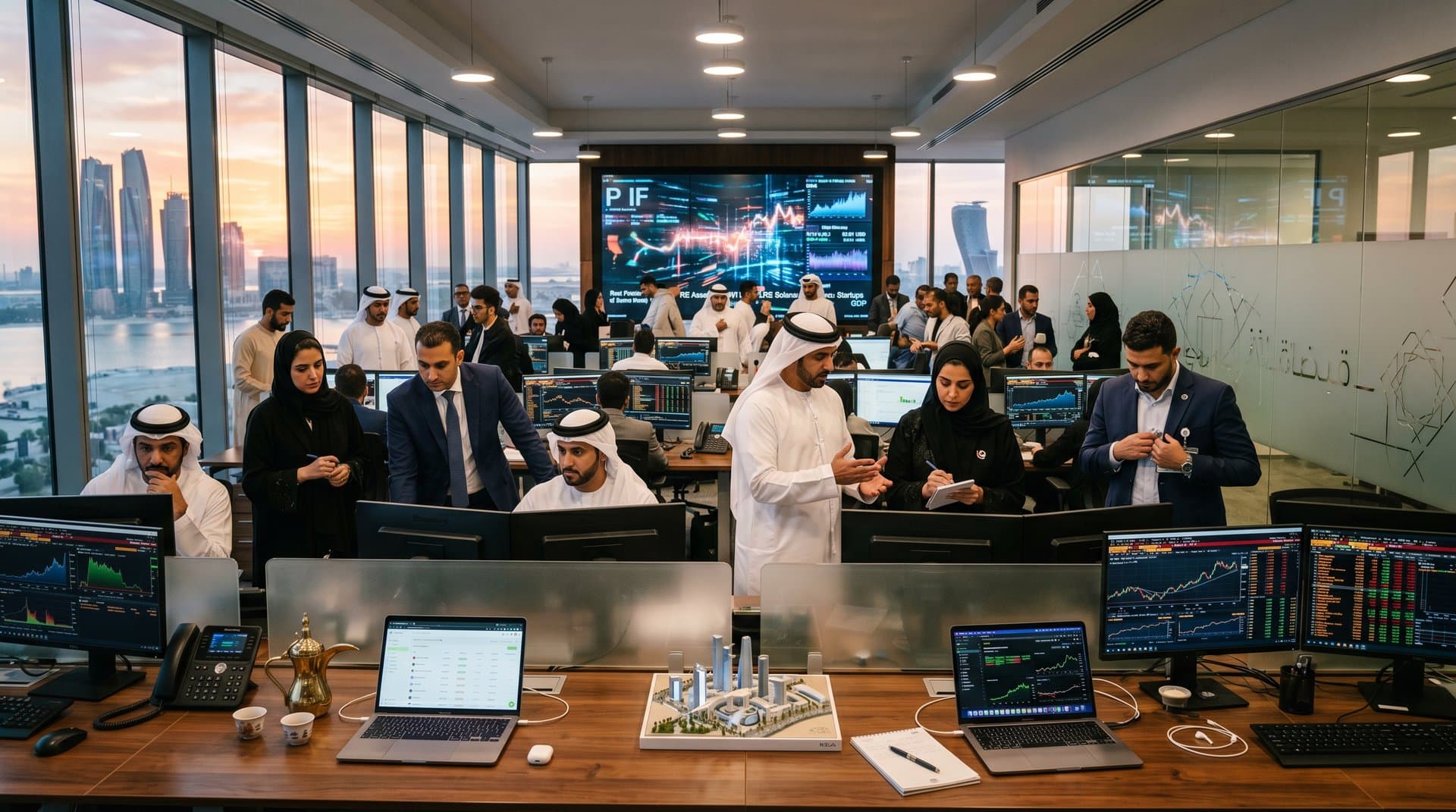
- 1. BlackRock new asset class FIGR_HELOC hits $1.03 and $17.7B USD market cap.
- 2. PIF and Mubadala target RWAs for Vision 2030 non-oil diversification.
- 3. ADGM FSRA and SAMA sandboxes regulate Gulf tokenized pilots.
BlackRock's new asset class of tokenized home equity lines of credit (HELOCs) launched on October 15, 2024. The FIGR_HELOC token trades at $1.03 USD with a $17.7 billion USD market cap, per CoinGecko data. Gulf sovereign funds target these real-world assets (RWAs) for fintech diversification from oil.
Public Investment Fund (PIF) of Saudi Arabia and Mubadala Investment Company of the UAE lead interest. These funds seek stable blockchain yields amid low global rates. Regional banks in Dubai's DIFC and Riyadh pilot tokenized structures under DFSA and SAMA oversight.
Gulf Sovereign Funds Target BlackRock's New Asset Class
PIF allocated $40 billion USD (SAR 150 billion) to technology and fintech in 2023, according to its annual report. Mubadala committed $10 billion USD (AED 36.7 billion) to digital assets, CEO Khaldoon Al Mubarak stated at Davos 2024. BlackRock's new asset class delivers Sharia-compliant returns via property-backed tokens, akin to murabaha structures.
Abu Dhabi Investment Authority (ADIA) pursues RWAs to meet its 8% annual return goal, per its 2023 review. Qatar Investment Authority (QIA) examines US real estate tokens for its $500 billion USD (QAR 1.8 trillion) portfolio. These strategies advance GCC non-oil GDP targets.
Saudi Arabia's PIF emphasizes RWAs in its $100 billion USD tech portfolio buildup. UAE's Mubadala partners with Figure Technologies on pilots. Such investments hedge against oil price swings, supporting long-term economic resilience.
Tokenized HELOCs Mechanics and Solana Blockchain Integration
Tokenized HELOCs convert homeowner equity into blockchain assets for instant liquidity. FIGR_HELOC maintains a $1.00 USD peg, backed by real estate collateral verified via oracles. BlackRock uses Solana for sub-second settlements at 0.00025 SOL fees ($0.04 USD), per BlackRock's tokenization insights.
Solana fits Gulf projects like NEOM. PIF invests $500 million USD (SAR 1.875 billion) in Solana's ecosystem, disclosures show. Dubai's VARA approves Solana pilots in DMCC free zone. This setup supports 24/7 trading for sovereign portfolios.
Developers integrate Chainlink oracles for reliable price feeds. Smart contracts automate collateral management. Gulf banks test these in sandboxes, ensuring Sharia compliance through independent audits.
ADGM FSRA and SAMA Frameworks Drive RWA Adoption
Abu Dhabi Global Market (ADGM) FSRA launched RWA sandboxes in 2023. These host 15 tokenized pilots. SAMA's Riyadh fintech accelerator tests HELOCs with Islamic checks. Saudi Capital Market Authority (CMA) requires asset-backing for sukuk-like tokens.
DIFC's DFSA regulates Dubai pilots. Fintech inflows reached $2.5 billion USD (AED 9.2 billion) last year, DFSA reports. UAE's innovation focus contrasts Saudi Arabia's Vision 2030 orchestration.
ADGM FSRA updates guidelines quarterly. SAMA collaborates with Fintech Saudi on 50+ startups. These regulators position GCC as RWA leaders.
Alignment with Saudi Vision 2030 and UAE Centennial 2071
Saudi Vision 2030 aims for 20% fintech GDP share by 2030. PIF drives $500 billion USD (SAR 1.875 trillion) non-oil investments. UAE fintech drew 10% of $23 billion USD FDI in 2023, Central Bank of UAE data indicates.
Mubadala teams with US firms on RWA pilots. Aramco Ventures deploys $1 billion USD in blockchain startups. BlackRock adds these assets to Bloomberg terminals at its Dubai office, mitigating energy risks.
Vision 2030 pillars include digital economy growth. UAE targets $100 billion USD fintech market by 2031. RWAs bridge traditional finance and blockchain.
Risks and Mitigation for PIF and Mubadala Investments
US housing cycles threaten HELOCs. Defaults hit 1.2% in 2022, Freddie Mac reports. EU MiCA rules start December 30, 2024, demanding custody adaptations. CMA requires Sharia audits for RWAs.
PIF requires Chainlink oracles in its risk framework. BlackRock applies on-chain custody through Fireblocks. Riyadh's DarkMatter audits smart contracts for $100 billion USD in digital assets.
Diversification limits exposure to 5% per asset class. Stress tests simulate downturns. Regional insurers back tokenized collateral pools.
RWAs Accelerate GCC Portfolio Maturity
Gulf fintech startups number 650, Magnitt's 2024 report states—a 30% yearly rise. Banks tokenize $5 billion USD (SAR 18.75 billion) in sukuk. NEOM adopts Solana for $500 billion USD development payments.
Qatar Airways tests token financing for aircraft. BlackRock's new asset class mainstreams RWAs. PIF and Mubadala establish GCC as tokenization hubs, Financial Times reports.
Energy firms shift to tech yields. This sustains Vision 2030. Future pilots expand to tokenized infrastructure, boosting regional liquidity.
Frequently Asked Questions
What is BlackRock's new asset class of tokenized HELOCs?
BlackRock's tokenized HELOCs digitize home equity on blockchain for liquidity. FIGR_HELOC trades at $1.03 with $17.7B market cap per CoinGecko.
How do tokenized HELOCs support Gulf energy diversification?
PIF and Mubadala invest in RWAs for non-oil growth under Vision 2030. They provide Sharia-compliant yields via ADGM and SAMA platforms.
What risks do Gulf investors face in BlackRock new asset class?
US housing exposure, MiCA rules, and oracle risks challenge adoption. PIF stresses due diligence and secure custody.
Why prefer Solana for Gulf RWA tokenized HELOCs?
Solana offers low fees and fast settlements for NEOM-scale projects. Mubadala backs its developers.