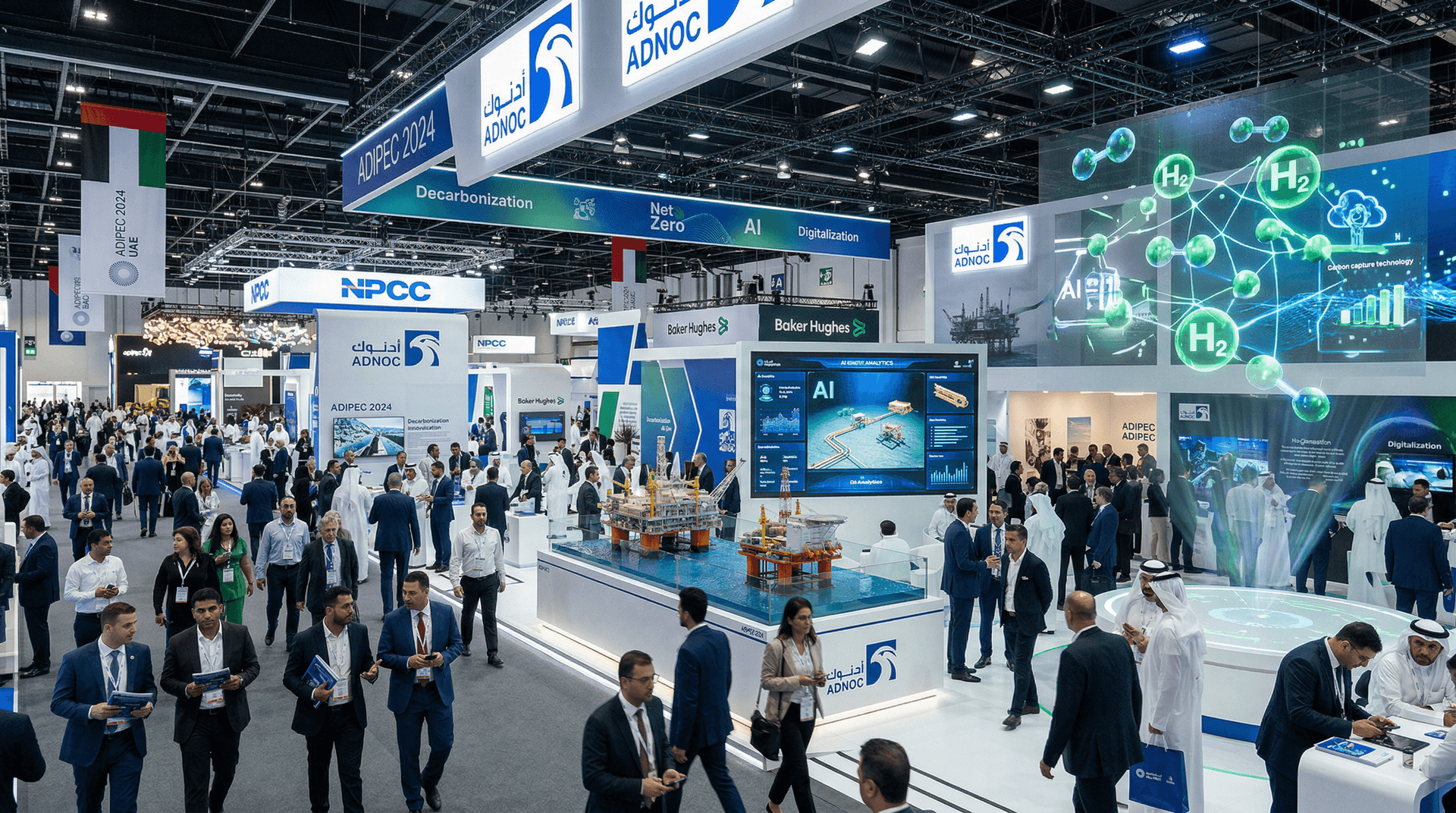
The Abu Dhabi International Petroleum Exhibition and Conference (ADIPEC) 2024, held from November 4 to 7, solidified its status as the world's largest energy event, drawing over 175,000 attendees from 130+ countries. At the heart of the conference, ADNOC (Abu Dhabi National Oil Company) announced its largest-ever contract awards, totaling $13.3 billion (AED 48.9 billion). These landmark deals target offshore operations and low-carbon solutions, signaling the UAE's strategic pivot towards technology-infused energy production.
Breaking Down the Mega Deals
ADNOC's awards spanned critical areas of its upstream portfolio. The star of the show was a $4.9 billion package for the Dalma Gas Project and Umm Al Anbar offshore developments. National Petroleum Construction Company (NPCC), a long-standing partner, secured $3.5 billion for engineering, procurement, construction, installation, and commissioning (EPCIC) works. This includes jackets, topsides, and pipelines essential for ramping up gas production.
ADNOC Drilling clinched $1.2 billion for offshore drilling campaigns, while other contracts went to firms like SAM Engineering and Zamil Group for fabrication yards. Additionally, $1.3 billion was allocated for the Hail and Ghasha project, the world's largest tight gas development, emphasizing sour gas treatment innovations.
| Contract Package | Value (USD) | Key Partners | Focus Areas |
|---|---|---|---|
| Dalma & Umm Al Anbar | $4.9B | NPCC, ADNOC Drilling | Gas production, EPCIC |
| Hail & Ghasha | $1.3B | Various | Tight gas, low-carbon tech |
| Drilling Rigs | $1.2B | ADNOC Drilling | Offshore drilling |
| Fabrication | $0.9B | Zamil, SAM | Yards expansion |
These awards not only boost ADNOC's production capacity to 5 million barrels per day by 2027 but also prioritize emissions reduction through advanced tech.
Tech at the Core: AI and Digital Transformation
Beyond brute financial muscle, the deals integrate cutting-edge technology. ADNOC highlighted AI-driven predictive maintenance and digital twins for offshore assets. For instance, the Dalma project incorporates autonomous drilling rigs and real-time data analytics to cut costs by 20% and emissions by 15%.
ADIPEC's theme, 'Advancing Energy Transition,' featured over 55 conference sessions on AI, hydrogen, and carbon capture. ADNOC's CEO, Sultan Ahmed Al Jaber, emphasized during his keynote: "We're marrying oil and gas expertise with digital innovation to meet net-zero goals while ensuring energy security."
Partners like Baker Hughes and Schlumberger showcased AI platforms for seismic imaging, accelerating exploration in UAE's vast reserves. This tech infusion positions ADNOC as a leader in 'energy 4.0,' blending fossil fuels with renewables.
Financial Implications for Gulf Economies
The $13.3 billion injection is a boon for UAE's economy, which derives 30% of GDP from oil. With Brent crude hovering around $75 per barrel in November 2024 amid geopolitical tensions, these contracts hedge against volatility. ADNOC's strategy supports UAE's Economic Vision 2031, diversifying into renewables while maximizing hydrocarbon value.
Regionally, Saudi Aramco's parallel Q3 earnings on November 5—reporting $31.5 billion net income—underscore Gulf resilience. Yet ADNOC's deals outpace peers in scale, attracting FDI from Asia and Europe. QatarEnergy and Kuwait Oil Company delegates at ADIPEC signaled similar tech upgrades.
Energy Transition and Global Partnerships
Sustainability was non-negotiable. Contracts mandate Scope 1 and 2 emissions cuts via electrification and flaring reduction tech. ADNOC's $1.5 billion low-carbon R&D allocation funds blue hydrogen and CCUS (carbon capture, utilization, and storage).
International tie-ups shone: TotalEnergies and INPEX extended concessions, while new MoUs with China National Offshore Oil Corp (CNOOC) eyed LNG tech transfer. The UAE-US AI council, referenced in side events, promises joint ventures in energy AI.
ADIPEC also launched the Energy Prism Alliance, uniting 50+ firms for standardized digital interoperability—a fintech-like blockchain for energy data sharing.
Challenges and Outlook
Despite optimism, hurdles remain. OPEC+ cuts, enforced by UAE ally Saudi Arabia, cap output. Tech adoption demands skilled labor; ADNOC's training academies aim to upskill 10,000 Emiratis by 2025.
Geopolitics loom: Red Sea disruptions inflate logistics costs 15%. Yet, UAE's neutral stance fosters deals like ADNOC's recent $2 billion equity stake in US firm Occidental.
Looking ahead, these contracts pave the way for ADNOC's 2030 emissions target: 35% intensity reduction. With Dubai Airshow looming (November 18-22), expect aviation-energy crossovers in sustainable fuels.
Why This Matters for the Gulf
ADNOC's ADIPEC triumph reinforces UAE as the Gulf's innovation hub. While Saudi's NEOM dreams big-picture future cities, Abu Dhabi's pragmatic tech-oil fusion delivers immediate ROI. For investors, it's a buy signal: ADNOC's 5.5% dividend yield rivals Big Oil peers.
As winter 2024 demand surges, these deals ensure Gulf states lead the energy chessboard—balancing legacy assets with tomorrow's tech.
Word count: 912