- 1. Bitcoin at $75,916 USD powers lucrative crypto bounties.
- 2. Fear & Greed Index at 26 reflects cyber and market fears.
- 3. Aramco and ADNOC deploy AI to counter $70B production risks.
Pro-Russian hackers launched crypto bounties on Telegram today, targeting Saudi Aramco and UAE's ADNOC. Rewards reach $75,916 USD in Bitcoin, per CoinGecko prices. The Crypto Fear & Greed Index hit 26 (Alternative.me), signaling elevated cyber and market risks.
Pro-Russian Hackers Escalate Crypto Bounties via Telegram
The group NoName057(16) posts tasks for DDoS attacks and ransomware. Reuters documented their campaigns against financial institutions and governments since 2022. These bounties exploit Bitcoin's liquidity, drawing low-skill actors from dark web forums.
Payouts route through mixers to Binance, evading sanctions, according to Chainalysis' 2024 Crypto Crime Report. Bloomberg reported similar vows for energy infrastructure attacks in January 2024.
Gulf Energy Digital Upgrades Heighten Cybersecurity Risks
Saudi Aramco allocates $10 billion USD to IoT smart fields under Vision 2030 (Aramco 2023 Annual Report). Over 50,000 sensors connect to cloud networks across Ghawar, the world's largest oil field.
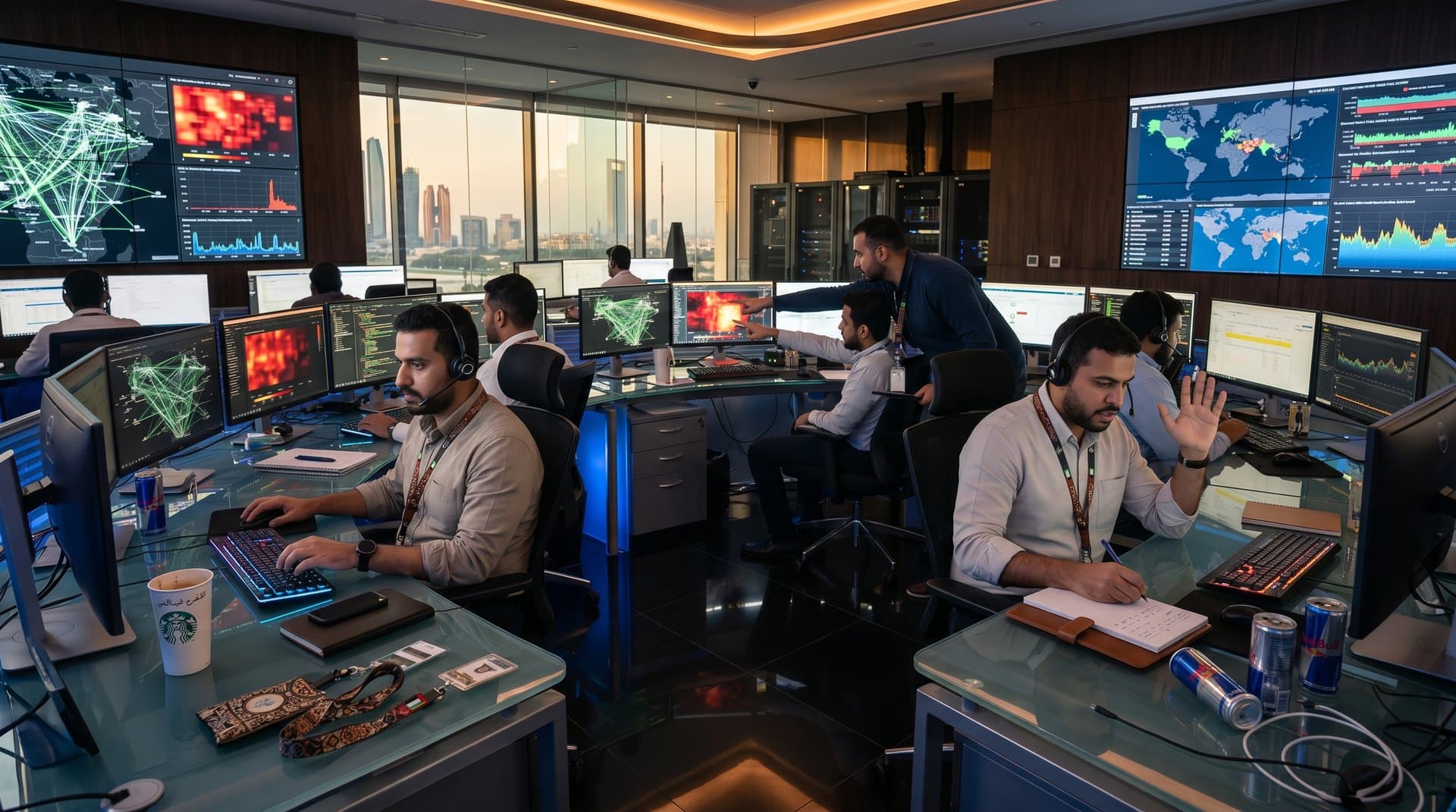
ADNOC integrates AI for predictive maintenance over 10,000 square kilometers of UAE assets (ADNOC 2023 filings). These systems link SCADA (Supervisory Control and Data Acquisition) controllers to Ethereum-based smart contracts for efficiency.
Ethereum trades at $2,253 USD (CoinGecko, October 10, 2024). Vast IoT networks expand attack surfaces for pro-Russian hackers.
Crypto Bounties Zero In on Aramco and ADNOC SCADA Systems
Hackers demand disruptions to pipeline controls and refineries. Botnets overwhelm edges, mimicking Ukraine grid attacks in 2015 (Dragos Inc. report).
Aramco manages the largest industrial control network, supporting $70 billion USD annual production (2023 filings). ADNOC's systems process 4.1 million barrels per day.
- Cryptocurrency: BTC · Price (USD): 75,916 · 24h Change: -0.7% · Market Cap (USD B): 1,520.2
- Cryptocurrency: ETH · Price (USD): 2,253 · 24h Change: -1.8% · Market Cap (USD B): 271.9
- Cryptocurrency: XRP · Price (USD): 1.37 · 24h Change: -1.1% · Market Cap (USD B): 84.4
- Cryptocurrency: SOL · Price (USD): 82.86 · 24h Change: -1.2% · Market Cap (USD B): 47.7
- Cryptocurrency: DOGE · Price (USD): 0.10 · 24h Change: +3.2% · Market Cap (USD B): 15.9
Source: CoinGecko, October 10, 2024.
Key Vulnerabilities in GCC Energy Operations
Aramco deploys 5G for remote drilling in Saudi fields, exposing legacy OT without zero-trust models. QatarEnergy adopts edge computing in North Field, yet faces similar gaps (QatarEnergy sustainability report).
Kuwait Oil Company integrates IoT amid Kuwait's digital agenda. NoName057(16) blends ideology with profit-driven DDoS on energy targets (Reuters, October 2022).
Aramco and ADNOC Bolster Defenses with AI Tools
Aramco partners Palo Alto Networks for AI threat hunting (company press release, 2024). ADNOC's Cyber Defense Center employs Elliptic for blockchain tracing of bounty flows.
Saudi Arabia's National Cybersecurity Authority (NCA) certifies Darktrace for anomaly detection in oil flows. UAE's TDRA enforces endpoint detection under the National Cybersecurity Strategy (TDRA guidelines, 2023).
Dubai Electricity and Water Authority (DEWA) pilots quantum-resistant encryption (DEWA annual report).
Gulf Regulations Counter Crypto Bounties in Energy Cybersecurity
Saudi NCA mandates zero-trust for critical infrastructure. UAE VARA licenses crypto exchanges, monitoring illicit Telegram activity (VARA registration data).
Dubai's VARA framework tracks $2.5 billion USD in virtual asset flows. SAMA's cybersecurity controls extend to energy-finance intersections (SAMA circulars, 2024).
Crypto Markets Power Pro-Russian Hacker Bounties
Bitcoin's $1,520.2 billion USD market cap enables botnet funding via P2P swaps. Ethereum automates payouts; XRP speeds micro-rewards.
Shamoon malware crippled Aramco in 2012 (Symantec analysis). Estonia's CERT blocks 90% DDoS traffic; Singapore audits grids (CERT-EE reports).
Outlook: GCC Energy Resilience vs Crypto Bounties
Mubadala invests in federated learning for threat sharing (Mubadala portfolio). Qatar builds sovereign cyber clouds. US Cyber Command alliances enhance detection.
Aramco and ADNOC aim for under-30-minute threat response. Crypto bounties test Gulf defenses as Bitcoin stabilizes at $75,916 USD. VARA and NCA updates will shape future crypto bounty risks.
Frequently Asked Questions
What are crypto bounties offered by pro-Russian hackers?
Hackers post DDoS or ransomware tasks on Telegram, paying in BTC at $75,916 USD or ETH. Gulf firms use blockchain tools to monitor channels.
How do crypto bounties increase risks for Gulf energy cybersecurity?
They enable low-skill attacks on Aramco IoT or ADNOC SCADA. Fear & Greed Index at 26 aids evasion; AI traces funds.
Which cryptocurrencies do hackers use for bounties?
BTC ($75,916 USD, $1,520.2B cap) leads. ETH ($2,253 USD) for contracts. XRP ($1.37 USD) for micro-payments. Source: CoinGecko.
What measures protect Gulf energy from hacker bounties?
Aramco uses Palo Alto AI; ADNOC Elliptic tracing. Saudi NCA certifies Darktrace; UAE mandates zero-trust.