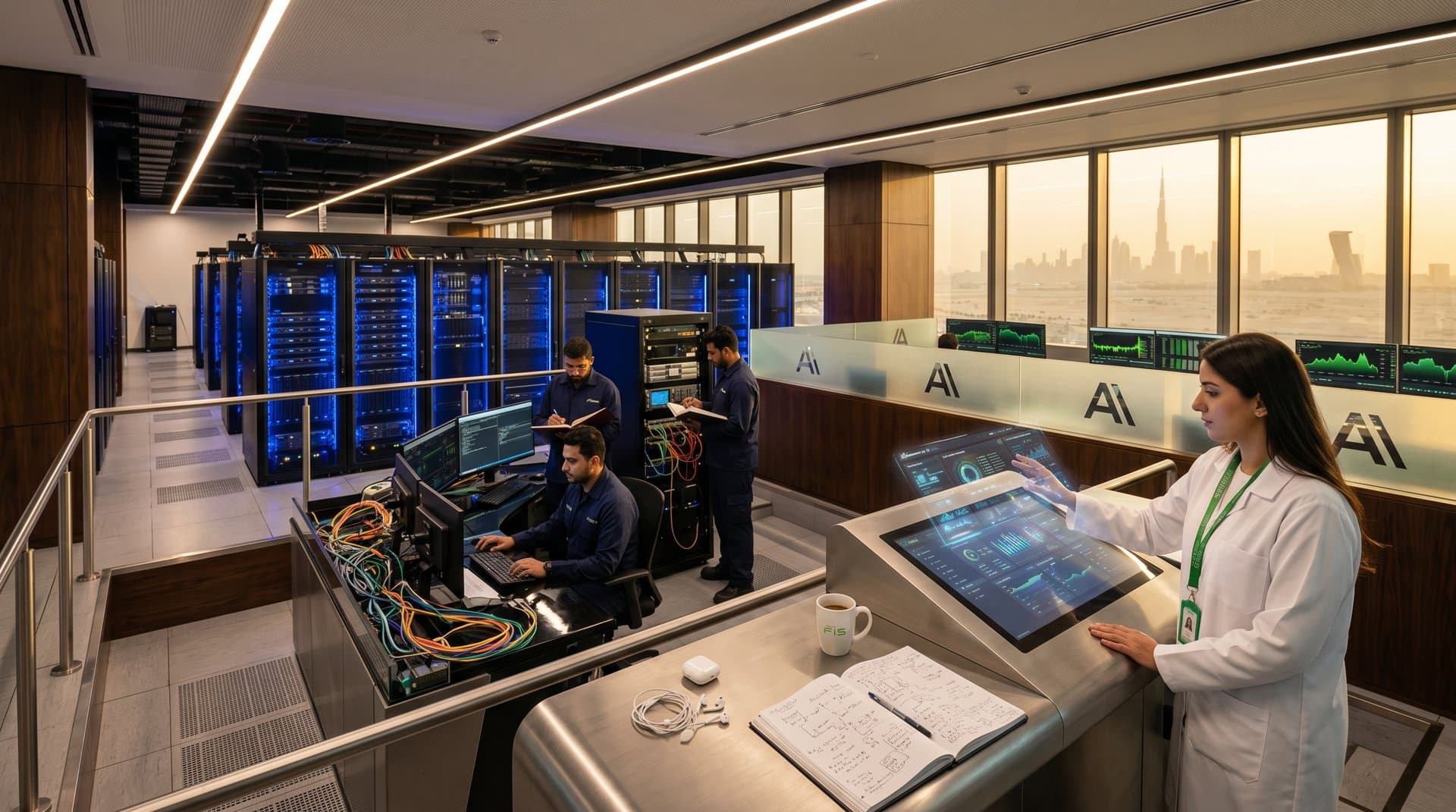
Dammam, Saudi Arabia – December 26, 2024 – In a significant boost to the Kingdom's digital infrastructure, Google Cloud officially unveiled its first cloud region in Saudi Arabia, located in the bustling eastern province city of Dammam. Announced on December 10, 2024, this new Google Cloud Saudi Arabia (Dammam) Cloud Region marks the tech giant's deepest foray into the Gulf's hyper-competitive cloud market, forged in partnership with local telecom powerhouse stc Group.
The launch comes at a pivotal moment for Saudi Arabia's tech ecosystem, aligning seamlessly with Vision 2030's push for economic diversification and technological self-reliance. By establishing a local cloud region, Google Cloud addresses key concerns around data sovereignty, latency, and compliance with national regulations like the Personal Data Protection Law (PDPL). Enterprises in the Kingdom can now process data within borders, reducing latency to under 10 milliseconds for users in the region – a game-changer for industries from finance to oil & gas.
Strategic Partnership with stc
stc, formerly Saudi Telecom Company, plays a central role as Google Cloud's key strategic partner. The duo has been collaborating since 2022, with stc leveraging Google Cloud's AI and analytics tools to modernize its operations. "This region represents a milestone in our joint journey to empower Saudi businesses with cutting-edge cloud technology," said Fahad AlHajeri, CEO of stc Cloud. "Together, we're building a resilient digital foundation for the future."
The Dammam region comprises three availability zones, ensuring high availability and disaster recovery capabilities. It's Google Cloud's 41st region globally and the second in the Middle East, following the UAE (Doha) region opened in 2023. This expansion underscores Google's commitment to the Gulf, where hyperscalers are racing to capture a projected $10 billion cloud market by 2027, according to IDC.
Regional Cloud Wars Heat Up
Saudi Arabia has emerged as a cloud hotspot, attracting investments from all major players. Amazon Web Services (AWS) launched its Riyadh region in 2022, Microsoft Azure followed with zones in the UAE and now plans for Saudi, while Oracle Cloud Infrastructure (OCI) has multiple sites across the Gulf. Google Cloud's entry intensifies this rivalry, positioning it to challenge AWS's dominance in the Kingdom.
"The Gulf is the fastest-growing cloud market globally, driven by government mandates for data localization," noted Kevin Ichhpurani, Corporate Vice President, Google Cloud Global Ecosystem. "Our Dammam region will enable Saudi innovators to harness Google Cloud's AI prowess, from Gemini models to Vertex AI, without compromising on performance."
Local firms are already signing on. Saudi Aramco, one of the world's largest energy companies, has been using Google Cloud for seismic data analysis. Neom, the futuristic $500 billion megacity project, relies on Google Workspace and BigQuery. Financial institutions like Saudi National Bank are migrating workloads to capitalize on cost savings – up to 30% lower latency translates to millions in efficiency gains.
Boosting Vision 2030 and Beyond
Vision 2030, Crown Prince Mohammed bin Salman's blueprint for post-oil prosperity, earmarks digital transformation as a cornerstone. The National Digital Transformation Program targets 100% cloud adoption in government by 2025. Google Cloud's region supports this by offering sovereign cloud options, where customers control encryption keys, vital for sensitive sectors like defense and healthcare.
Economically, the initiative promises job creation. Google Cloud has trained over 10,000 Saudis through its skills programs, with plans to double that by 2026. stc's cloud unit, already valued at $1.5 billion, eyes $5 billion in revenues by 2030, fueled by such partnerships.
Technical Highlights and Use Cases
Powered by Google's sustainable infrastructure – running on 100% carbon-free energy in many zones – the Dammam region supports a suite of services:
- Compute Engine and Kubernetes Engine: For scalable VMs and containers.
- AI/ML Tools: Vertex AI for custom models, helping Saudi startups in fintech and e-commerce.
- Data Analytics: BigQuery for petabyte-scale queries on local oilfield data.
- Security: Assured Workloads for compliance with NCA standards.
A prime example is retail giant Jarir Bookstore, which uses Google Cloud for personalized recommendations, boosting sales by 20%. In healthcare, King Faisal Specialist Hospital leverages Looker for patient analytics.
Challenges and Opportunities Ahead
While exciting, challenges persist. Cybersecurity threats are rising, with Saudi facing 3,000 daily attacks per SAMA reports. Interoperability between clouds and skill gaps remain hurdles. Yet, initiatives like the Cloud Computing Special Economic Zone in Riyadh aim to address these.
Looking ahead, analysts predict Saudi's public cloud spend to hit $2.5 billion in 2025, per Gartner. Google Cloud's multi-region strategy – with eyes on Kuwait and Oman – could solidify its Gulf footprint.
As the Kingdom strides towards giga-project ambitions like NEOM and Red Sea Global, Google Cloud's Dammam region isn't just infrastructure; it's the backbone of a digital renaissance. For Gulf businesses, the message is clear: the cloud era has landed at home.
Gulf N News is at the forefront of Middle East tech coverage. Follow us for updates on Vision 2030's tech revolution.
(Word count: 912)