By Omar Khalil April 12, 2026
LinkedIn Chief Economic Opportunity Officer Aneesh Raman warned on April 12, 2026, of Gulf AI job vulnerability for software engineers in UAE and Saudi tech hubs. He shared this in a Sky News Australia interview. AI tools automate code generation and debugging.
Raman cited LinkedIn's Economic Graph, which tracks 1 billion professionals. Software engineers rank highest in vulnerability. Gulf developers now compete with GitHub Copilot and Google's Gemini.
Gulf AI Job Vulnerability in Dubai Tech Hubs
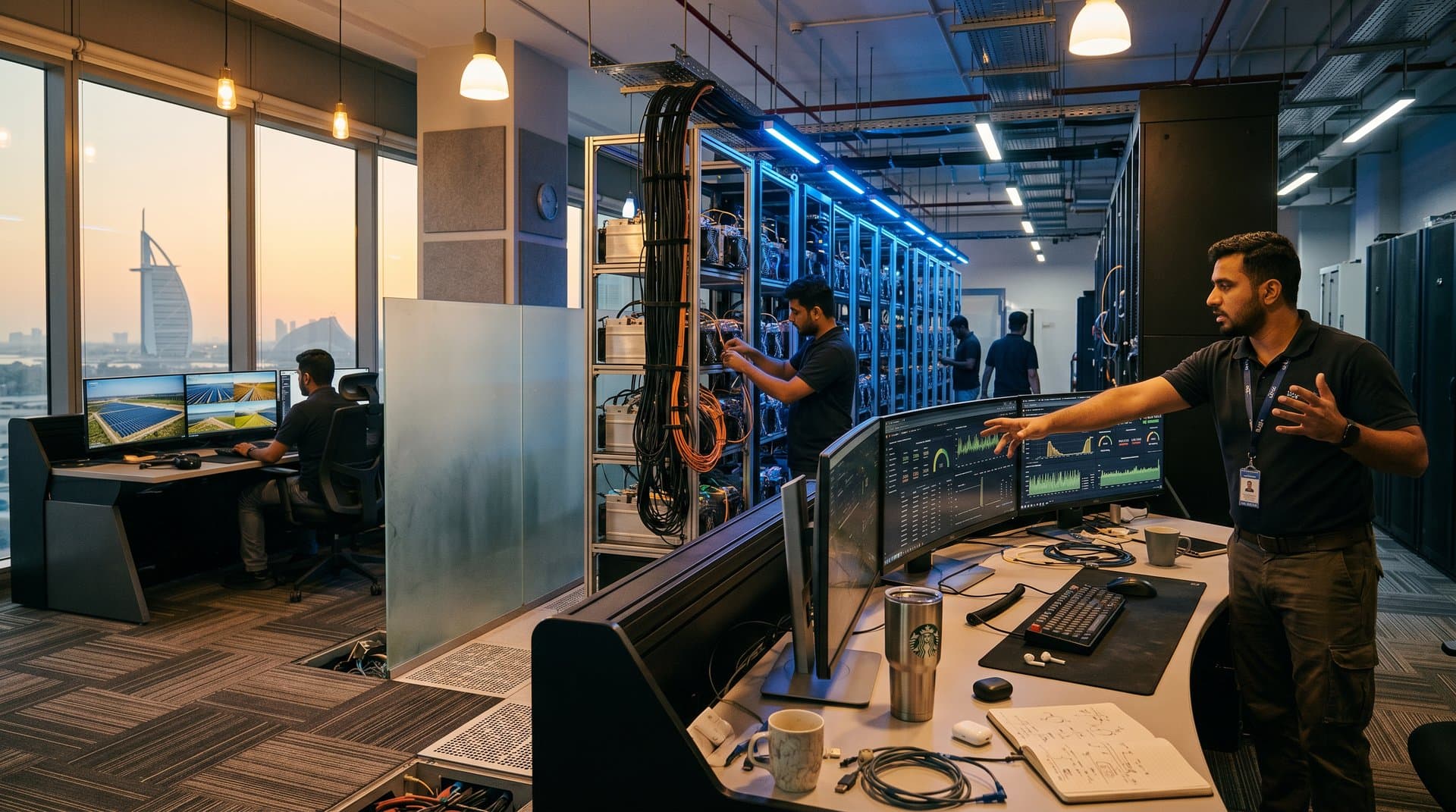
Dubai Silicon Oasis software engineer Fatima Al-Mansoori tests AI-driven traffic algorithms for Roads and Transport Authority (RTA). Her team deploys 5,000 IoT sensors linked to AI models that predict real-time congestion. RTA's March 2026 report shows these tools cut coding time by 40%.
Her firm, an e& subsidiary, integrated OpenAI's GPT-4o for backend development last month. Engineers spend 30% less time on routine tasks, e& metrics from April 10, 2026, confirm. Productivity gains raise questions about headcount needs.
Engineers at Dubai Silicon Oasis review AI-suggested fixes faster than manual ones. One station stood idle as its coder shifted to AI oversight.
Saudi Arabia Accelerates AI in NEOM and Qiddiya
Saudi Public Investment Fund (PIF) allocated $5 billion USD to AI in 2026, per April 1 disclosures. NEOM deploys 100,000 AI agents across 26,500 square kilometers using Anthropic's Claude models.
Riyadh's Qiddiya gigaproject saw stc Group roll out AI code assistants on April 5, 2026. The platform handles 70% of API integrations, stc reported. Engineers focus on model fine-tuning; entry-level roles vanish.
PIF partners with NVIDIA on $1.2 billion USD GPU clusters. These power AI that matches human coders in speed and accuracy.
Regional Strategies Fuel AI Adoption
UAE's National AI Strategy 2031 targets 1 million AI-skilled workers, Ministry of Artificial Intelligence announced in March 2026. Saudi Vision 2030 invests $20 billion USD in digital transformation, Kingdom Centre for AI reported April 2026.
Both nations offer 10-year Golden Visas for AI experts. Dubai tech salaries average $120,000 USD annually, Bayt.com Q1 2026 data shows. AI threatens mid-tier software pay.
Fintech hubs like Abu Dhabi's ADGM deploy AI for blockchain smart contracts.
Global Benchmarks Urge Faster Action
Singapore reskilled 40,000 tech workers via SkillsFuture since 2024, Infocomm Media Development Authority confirms. Estonia's e-governance uses AI for 90% code maintenance, Riigi Infosüsteemi Amet reports April 2026.
South Korea's NIPA funds $2 billion USD in AI upskilling. UAE lags with 15% of software engineers in AI training, Dubai Future Foundation March 2026 survey.
Gulf investments lead, but Saudi firms report 25% AI tool usage among developers, below Estonia's 60%.
Gaps Persist in Training and Adoption
LinkedIn data shows 22% of Gulf software postings mention AI skills, up from 8% in 2025. UAE tech firms cut 5,000 jobs since January 2026, Ministry of Human Resources reports.
A Bayt.com poll on April 10, 2026, found 45% of Saudi developers unaware of Cursor AI. Training trails hardware investments.
Microsoft Azure powers 60% of Gulf AI workloads, Gartner April 2026. Costs fell 35% year-over-year, pressuring human teams.
Reskilling Outlook Addresses Gulf AI Job Vulnerability
UAE launches AI Academy with 100,000 slots by year-end, Mohamed bin Zayed University of AI announced April 12, 2026. Saudi's Human Capability Development Program trains 50,000 coders in prompt engineering.
Dubai targets 40% AI proficiency in tech roles by 2027. Bahrain's FinTech Bay raised $150 million USD for AI education on April 8, 2026.
Gulf leaders view AI as a growth engine. Software engineers adapting to oversight roles command $150,000 USD premiums. Those pivoting fastest mitigate Gulf AI job vulnerability.
Omar Khalil is technology reporter at Gulf N News, tracking smart city and AI initiatives.