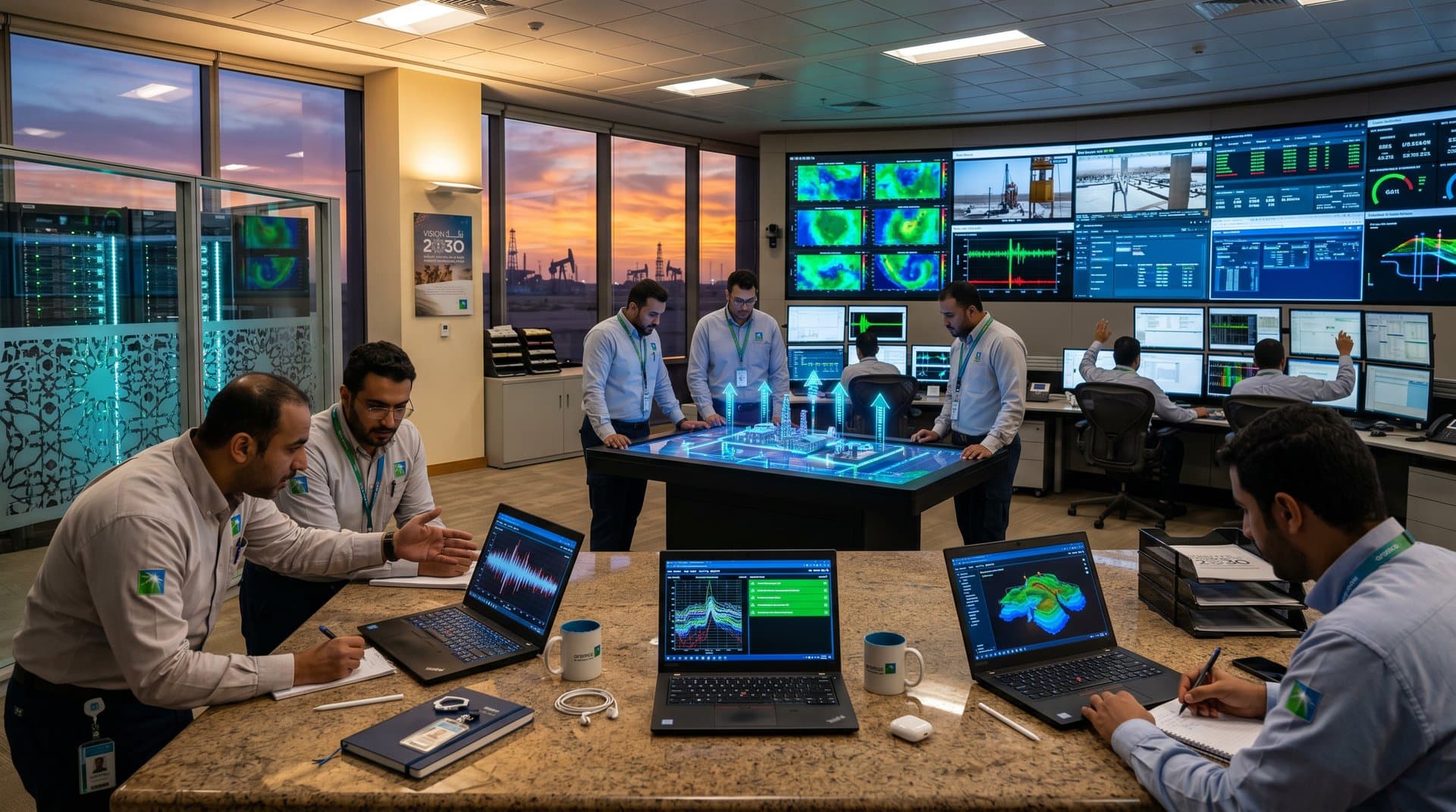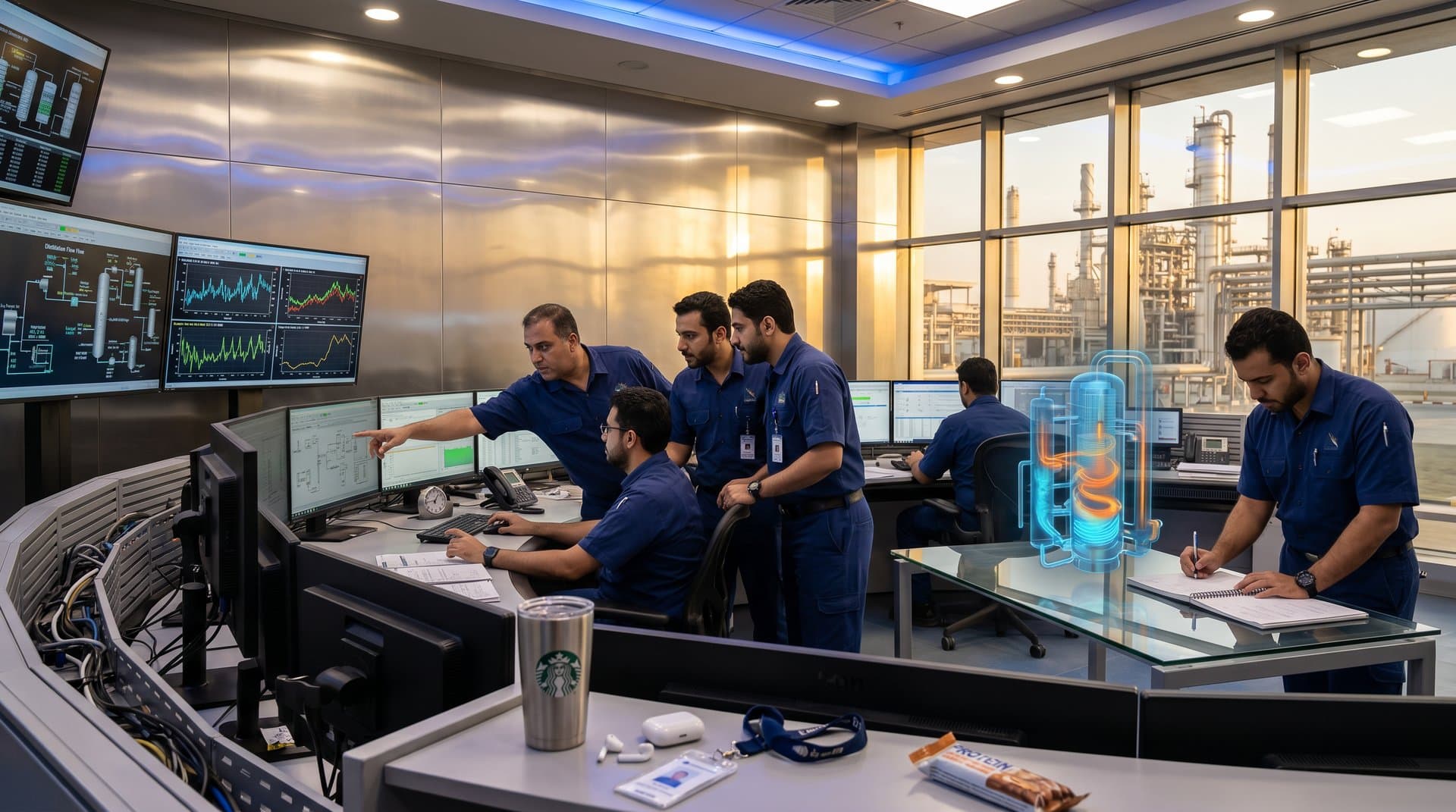
- Ras Tanura processes 550,000 bpd; Ruwais 587,000 bpd (EIA, 2024).
- Operations yield $100B+ USD revenue for PIF and Mubadala.
- AI cuts costs 20%; Gulf adds 50% global capacity (Argus, 2024).
Saudi Aramco's Ras Tanura refinery handles 550,000 barrels per day (bpd). ADNOC's Ruwais processes 587,000 bpd through advanced oil refinery processes (EIA, April 2024). Combined, they generate over $100 billion USD annually, fueling PIF and Mubadala. See how oil refineries work.
These sites span thousands of acres. Each cost over $20 billion USD to build. Revenues power Vision 2030 investments.
Global demand reaches 102 million bpd (EIA, 2023). Oil supplies 30% of energy and 90% of chemicals (IEA, 2023). Gulf operators use AI to maximize outputs.
Atmospheric Distillation Starts Oil Refinery Processes
Operators heat crude to 350°C in the atmospheric tower. Propane (C3H8) vaporizes first. Gasoline fractions boil at 50-190°C per EIA data.
Vapors condense on 30-40 trays. Ras Tanura yields 40% gasoline (Aramco 2023 annual report). Ruwais optimizes naphtha for exports. ADGM enables fintech trading platforms.
This step produces $30 billion USD yearly for Aramco (Aramco FY2023). Profits fund PIF's SAR 700 billion Vision 2030 projects.
Vacuum Distillation Extracts Heavy Residue Value
Vacuum units process atmospheric residues at 10-50 mmHg. They yield vacuum gas oil (VGO) for crackers and bitumen for roads.
Siemens technology reduces energy use by 15% at Ruwais (Siemens case study, 2023). Premium products sell 20% above crude prices.
Ras Tanura's IoT sensors track 10,000 points. They cut downtime by 10% (Aramco digital report, 2024). Revenues support SAMA stability.
Fluid Catalytic Cracking Upgrades Residues
Fluid catalytic cracking (FCC) units convert VGO to gasoline with zeolite catalysts at 500°C. Hydrocracking adds hydrogen for low-sulfur diesel.
Digital twins forecast catalyst decay. Yields rise 5% (ADNOC-Siemens partnership, 2023). Saudi exports grew 8% in 2023 (CMA data).
PIF commits $5 billion USD to downstream upgrades (PIF annual report, 2023). Blockchain ensures provenance per CMA standards by 2026.
AI and Digital Twins Transform Refinery Technology
Ras Tanura deploys 50,000 sensors for AI models. ADNOC's Siemens digital twins run 1,000 scenarios daily. Maintenance costs drop 20% (Siemens, 2024).
QIA invests $2 billion USD in green hydrogen (QIA portfolio, 2024). Carbon capture complies with EU CBAM rules.
Mubadala backs 15 digitization startups. Turnarounds speed up 20% (Mubadala Ventures, 2023).
Reforming and Alkylation Boost Complexity
Catalytic reforming upgrades naphtha to aromatics with platinum. It supplies 90% of chemicals (IEA, 2023). Alkylation creates jet fuel from olefins.
Jubail achieves 12.5 Nelson Complexity Index (Wood Mackenzie, 2023). Complexity raises margins 25%.
Automated systems cut waste 30%. Revenues target ADIA midstream goals.
Gulf Refineries Anchor Energy Finance Future
Desulfurizers meet IMO 2020 sulfur caps. Gulf claims 50% of new capacity (Argus Media, January 2024).
Ruwais uses solar for 20% of auxiliaries (ADNOC sustainability report, 2023). Batteries manage peaks.
Oil refinery processes integrate AI and blockchain. PIF and Mubadala target $50 billion USD in tech diversification by 2030.
Frequently Asked Questions
How do oil refinery processes separate crude components?
Atmospheric distillation heats crude to 350°C, boiling lighter fractions like propane (C3H8). Vapors condense on trays by boiling points. Residues advance to vacuum units.
What makes Gulf oil refinery processes financially sustainable?
Refineries handle 1.137M bpd over thousands of acres. Cracking maximizes high-value yields. Revenues fund PIF and Mubadala (Aramco, 2023).
Why invest in Gulf oil refinery technology?
AI optimizes amid 102M bpd demand. Digital twins enable green upgrades. Cuts costs for 90% chemical production (IEA, 2023).
How large are Gulf oil refinery processes?
Ras Tanura (550K bpd) and Ruwais (587K bpd) span thousands of acres, cost $20B+ USD (EIA, Aramco 2023).