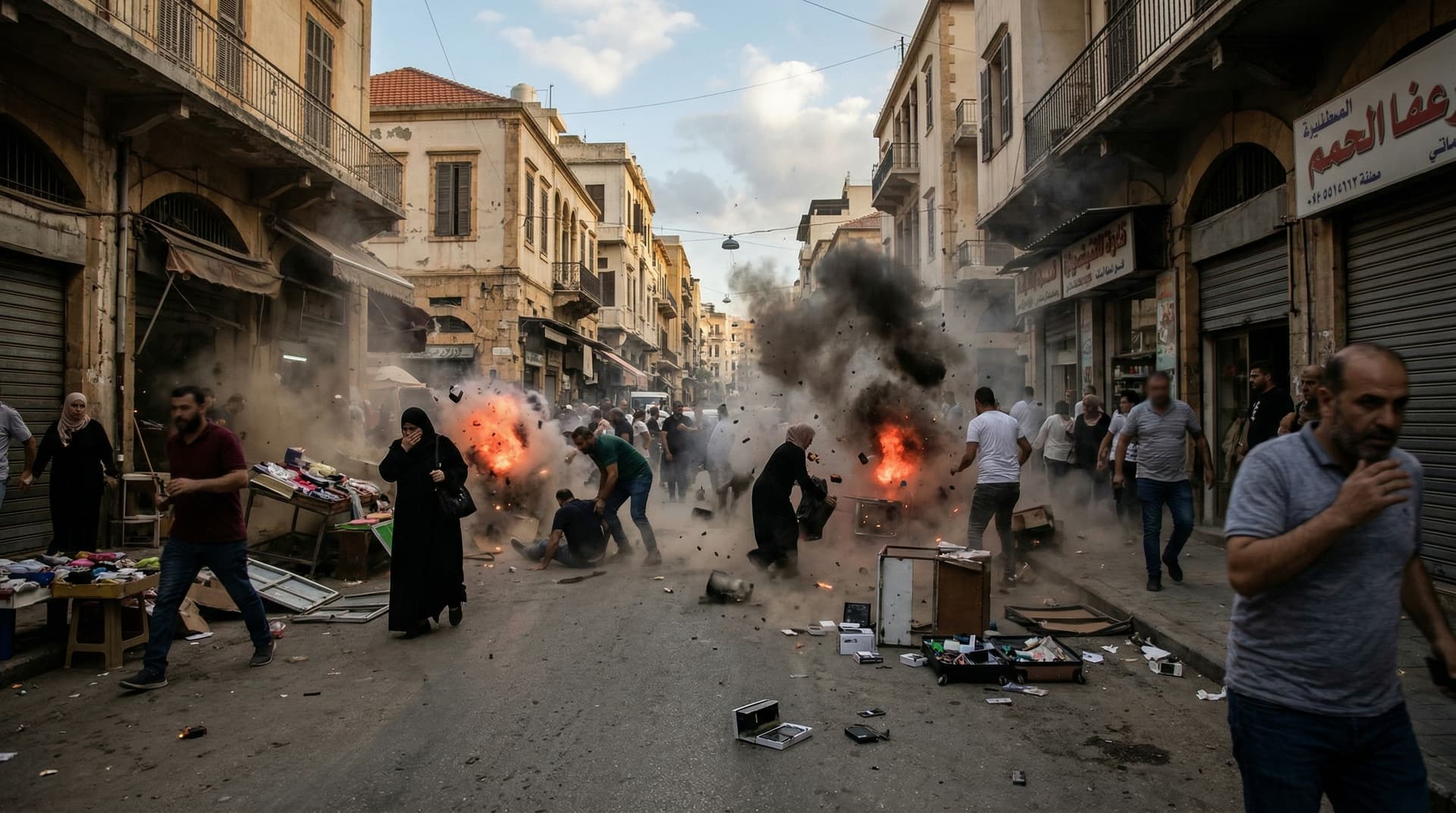
Dubai, UAE – September 29, 2024 – In a operation that stunned the world, thousands of pagers carried by Hezbollah members detonated simultaneously on September 17, 2024, across Lebanon. The blasts killed at least 37 people, including civilians, and injured over 3,000 others. This meticulously planned strike, widely attributed to Israel, marks a new chapter in hybrid warfare, blending cyber sabotage with explosive devices.
The Day the Pagers Exploded
It was around noon in Beirut when the explosions began. Hezbollah operatives, low-level commanders, and even medics reached for their pagers – devices they had adopted to evade Israeli surveillance on smartphones. Instead of messages, the pagers erupted in fireballs, shredding hands, faces, and torsos. Videos flooded social media showing carnage in cafes, markets, and streets from Beirut to the Bekaa Valley.
Lebanese Health Minister Firas Abiad reported 2,800 injuries in the initial wave, with many suffering severe burns and shrapnel wounds. The attack's precision was chilling: only Hezbollah-issued pagers exploded, sparing others nearby. A second wave hit on September 18, targeting walkie-talkies, killing 25 more and injuring hundreds.
Hezbollah blamed Israel, vowing revenge. Israeli officials remained silent, but U.S. sources confirmed Tel Aviv's involvement to The New York Times. From a Gulf perspective, this escalation threatens stability, with Saudi Arabia and UAE urging de-escalation amid fears of broader conflict.
Anatomy of a Supply Chain Attack
The technology behind this op is as ingenious as it is terrifying. The pagers were AR-924 models branded by Taiwan's Gold Apollo but manufactured by BAC Consulting KFT in Hungary. Investigators found BAC's website vanished post-attack, its address a non-existent Budapest suburb.
Forensic analysis reveals the sabotage occurred during production. Tiny amounts of PETN explosive – less than 3 grams per device – were packed into batteries, hidden under circuit boards. A coded message, mimicking a Hezbollah alert (e.g., 'urgent 009'), triggered a circuit overload, igniting the explosive via heat.
This wasn't crude terrorism; it was a state-level supply chain compromise. Hezbollah bought 5,000 pagers via a European front company earlier in 2024, believing them secure. Israel, experts say, intercepted the supply chain months ahead, possibly via Mossad agents or cyber means.
"It's Stuxnet 2.0," says cybersecurity expert Dr. Fatima Al-Mansoori from Dubai's Mohammed Bin Zayed University. "But physical. They turned everyday tech into smart bombs."
Why Pagers? Hezbollah's Anti-Surveillance Gambit Backfires
Hezbollah shunned smartphones after Israel's history of NSO Group's Pegasus spyware hacks. Leader Hassan Nasrallah ordered pagers and landlines for inner circles. Pagers use radio frequencies harder to track than cellular data, ideal for asymmetric warfare.
Ironically, this low-tech choice enabled the high-tech trap. Pagers' simplicity allowed tampering without detection. Gold Apollo denied involvement, claiming BAC handled production independently.
The walkie-talkie hits used similar tactics: IC-V86 models from Icom, rigged with explosives in batteries, detonated by a 5-second transmission.
Gulf Reactions and Regional Ripples
In the Gulf, reactions mix condemnation with caution. UAE Foreign Minister Abdullah bin Zayed called for restraint on X, while Saudi state media highlighted civilian casualties. Qatar, hosting Hamas leaders, decried the 'barbarity.'
Yet, quiet diplomacy prevails. Normalized ties via Abraham Accords position UAE and Bahrain as Israel's partners against Iran-backed proxies. Escalation risks oil prices – Brent crude spiked 3% post-attack – hitting Gulf economies.
"This could drag Lebanon into full war, spilling over borders," warns Gulf analyst Khalid Al-Jaber from Qatar University. "Gulf states prioritize deterrence over confrontation."
Iran vowed retaliation via proxies, but its missile barrage on Israel Oct 1 (post our date) shows the chain reaction.
Tech Warfare's New Frontier
This attack redefines conflict. Supply chain vulnerabilities, exposed in SolarWinds hack (2020), now weaponized physically. Drones, cyber, and now booby-trapped consumer goods.
Implications for tech firms: rigorous supply audits mandatory. Governments eye regulations. In Gulf, UAE's Falcon Shield initiative accelerates against such threats.
Military analysts compare to WWII sabotage, but digital age amplifies. Israel's Unit 8200, cyber elite, likely orchestrated, sourcing from decades fighting Hezbollah.
Hezbollah's Response and Aftermath
Hezbollah launched rockets into Israel, but avoided all-out war. Nasrallah's Sept 27 speech railed against the 'spiders of Zion,' but intel gaps exposed.
Lebanon grapples with fallout: hospitals overwhelmed, economy craters further. International probes loom, but attribution sticks to Israel.
Lessons for the World
The pager plot underscores no tech is safe. Encryption? Circumvented. Analog? Infiltrated. For Gulf nations investing billions in AI and defense tech, it's a wake-up.
As Dubai hosts GITEX 2024 soon, sessions on secure comms will boom. Israel's edge in tech-intel fusion sets a benchmark – and a warning.
This September shockwave reshapes Middle East shadows. Gulf watches warily, balancing security with peace.
Gulf N News Senior Tech Correspondent