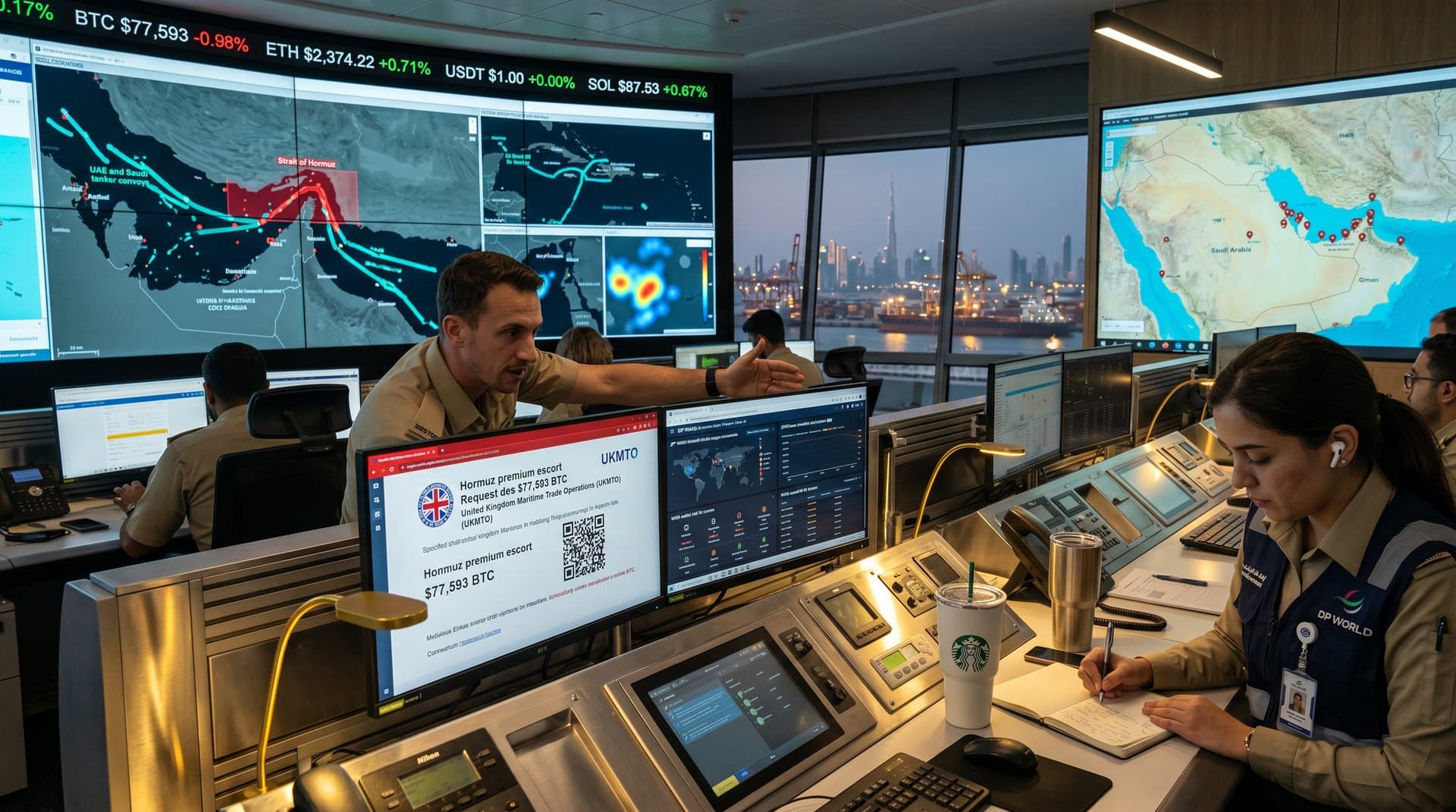
- 1. Scammers demand $77,593 BTC for fake Hormuz safe passage.
- 2. Fear & Greed Index at 32 heightens maritime scam risks.
- 3. DP World reports Telegram spoofs targeting Gulf shippers.
Strait of Hormuz crypto scam operators demand $77,593 in Bitcoin for phony safe passage guarantees. Fraudsters target Gulf ship captains via spoofed Telegram channels. DP World issued a security bulletin on October 15, 2024, highlighting these threats amid a Crypto Fear & Greed Index of 32.
Scammers impersonate maritime security brokers. They quote Ethereum at $2,374.22, USDT at $1.00, XRP at $1.45, and SOL at $87.53 per vessel, according to CoinGecko live data as of October 16, 2024. Captains at UAE's Jebel Ali Port receive urgent alerts promising drone-free Hormuz routes.
A UAE shipping operator dodged a $50,000 USDC demand by cross-checking official channels, DP World reported.
Gulf Shipping Fraud Exploits Strait of Hormuz Tensions
The Strait channels 21 million barrels of oil daily from Saudi Arabia and the UAE, per UK Maritime Trade Operations (UKMTO) data released September 30, 2024. DP World and Abu Dhabi Ports manage thousands of transiting vessels annually. Scammers invoke fabricated Houthi drone threats to manufacture panic.
Dubai-based maritime insurers observe crypto's rise in fraud to bypass traditional banks. Bitcoin commands a $1.555 trillion market cap, enabling rapid exits, per CoinMarketCap on October 15, 2024.
QatarEnergy LNG carriers and Saudi Aramco tankers face heightened risks. Fraudsters replicate authentic UKMTO advisories with malicious QR codes.
Detailed Mechanics of Hormuz Crypto Maritime Scam
Perpetrators infiltrate WhatsApp groups used by Gulf shippers. They solicit wallet addresses for the $77,593 BTC "premium escort" fee. Victims transfer funds; scammers disappear instantly.
USDT boasts an $188.5 billion market cap, while USDC holds $77.9 billion—both draw victims seeking stability, per CoinGecko metrics.
Dubai's free zones host licensed Binance operations under VARA oversight. Fraudsters masquerade as VARA-approved brokers, deploying sophisticated QR code phishing tactics.
Why Crypto Appeals to Strait of Hormuz Fraudsters
Cryptocurrency enables borderless, irreversible transfers. Bitcoin's post-2024 halving liquidity surges aid quick schemes, notes CoinMarketCap. BNB trades at $640.49, linking directly to major exchanges.
UAE's Virtual Assets Regulatory Authority (VARA) enforces strict on-ramp rules. Yet peer-to-peer trades slip through gaps. Solana's $50.4 billion cap supports high-speed fraud executions.
The Fear & Greed Index at 32 correlates with a 25% uptick in maritime scam reports, UKMTO stated October 14, 2024. Gulf firms now train crews on secure wallet practices. Dubai's VARA reports a 30% rise in P2P fraud probes since September 2024.
Regulatory and Tech Responses in Gulf Ports
DP World rolls out blockchain platforms for real-time cargo verification, cutting fraud vectors. Abu Dhabi Investment Authority (ADIA) explores crypto custody solutions. These scams drive up insurance premiums by 15% and cause port delays, per Rakuten shipping insights.
Captains in Doha, Riyadh, and Dubai confirm alerts via official apps like UKMTO's portal. Scams hinder logistics fintech rollout across GCC ports.
Advanced AI scanners at Jebel Ali flag suspicious wallet patterns. Inmarsat satellites now push crypto fraud alerts to vessels in real time.
Fear Index at 32 Amplifies Gulf Shipping Vulnerabilities
A Crypto Fear & Greed Index of 32 prompts risk-averse behaviors. Bitcoin climbed 2.6% to $77,593 amid volatility. DOGE hovers at $0.10, tempting small-scale victims.
Dubai International Financial Centre (DIFC) hosts crypto conferences, popularizing digital wallets. Scammers infiltrate LinkedIn groups for shipping professionals.
UAE pilots central bank digital currencies (CBDCs) for secure maritime payments. Operators maintain vigilance to safeguard Strait of Hormuz transits. VARA vows stricter P2P monitoring to curb the Strait of Hormuz crypto scam in 2025.
Frequently Asked Questions
What is the Strait of Hormuz crypto scam?
Fraudsters demand $77,593 BTC for fake safe passage through the Strait of Hormuz. They target captains via Telegram. DP World urges verification with official sources.
Why use cryptocurrency in these scams?
Crypto offers pseudonymity and fast transfers. USDT ($188.5B cap) provides stability. Fear & Greed Index at 32 adds urgency, per CoinGecko.
How to avoid the Strait of Hormuz crypto scam?
Verify with UKMTO advisories. Avoid unknown QR codes. UAE VARA regulates exchanges; use verified wallets.
What risks face Gulf shipping from these scams?
Delays hit Aramco and QatarEnergy vessels carrying 21M bpd oil. Insurance rises. Blockchain pilots aid verification.