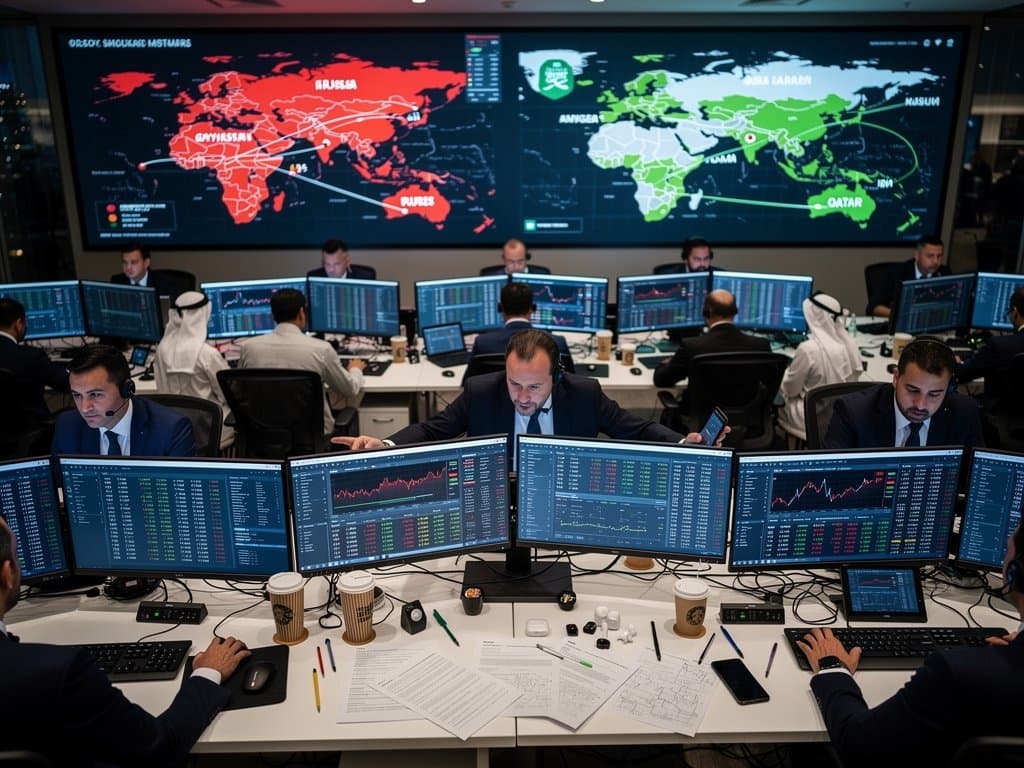
- 1. Kyrgyz crypto exchange hack drains $150M, halting Russian ruble-crypto evasion channels.
- 2. OPEC+ quotas face 500K bpd cut pressure as Moscow strains Gulf alliances.
- 3. PIF, ADIA track BTC $76,357 volatility with $20B+ crypto ETF exposures.
The Kyrgyz crypto exchange hack struck December 30, 2024. It drained $150 million USD from liquidity pools Russians used to evade Western sanctions. Attackers hit wallet APIs, halting ruble-to-crypto swaps for Moscow imports. Saudi Arabia and UAE watch BTC at $76,357 USD. (38 words)
Kyrgyz platforms handled over $10 billion USD in Russian flows since 2022, per Chainalysis. The breach froze USDT and USDC on TRX and SOL networks. Reuters reports Russia's crypto payment push. Riyadh's Samba Financial Group tracks $50 billion USD annual GCC energy deals.
Kyrgyz Crypto Exchange Hack Blocks Russian Tactics
Russia uses Kyrgyz hubs for P2P off-ramps from Sberbank. The hack stops $200 million USD monthly TRX transfers and $100 million USD SOL swaps. Kyrgyz regulators impose stricter KYC, echoing UAE's VARA in Dubai, which licensed 25 fintechs in 2024.
Moscow eyes state stablecoins. Europe's MiCA starts full enforcement January 2026, sealing EU paths. National Bank of Kuwait stays neutral on Russia's 3 million bpd oil trades. Abu Dhabi's ADGM uses AI to scan risks to platforms like Rain.
Saudi SAMA's sandbox tested 15 crypto projects in 2024. PIF invested $500 million USD in blockchain last year, per annual report.
Gulf Stability Faces Kyrgyz Crypto Exchange Hack Pressure
OPEC+ quotas depend on Russia's 9.5 million bpd output. Crypto channels fueled Asia exports, holding Brent at $70 USD per barrel. The hack pushes Russia for 500,000 bpd cuts at Vienna meetings, per OPEC's Haitham Al Ghais.
Saudi PIF holds $20 billion USD in BlackRock crypto-tied ETFs. Mubadala put $2 billion USD into digital assets via Grayscale. ADIA's $1 trillion USD portfolio includes VC blockchain stakes. CoinDesk notes Central Asia risks, citing $500 million USD prior hacks.
Outages could spike Brent volatility 15%, per Goldman Sachs. Qatar QIA pledged $1 billion USD to blockchain in 2024.
Why Gulf Monitors Russian Flows After Kyrgyz Crypto Exchange Hack
Saudi Arabia leads OPEC+ at 9 million bpd. Sanctions evasion built Russia's $600 billion USD reserves. The hack heats JMMC quota talks next month.
UAE's Dubai DMCC handles $5 billion USD quarterly ruble-crypto trades. Mubadala's $10 billion USD tech portfolio yields 20% from Solana in 2024. ADGM FSRA warned on illicit flows last week.
Riyadh bolsters energy markets. Doha pilots LNG-crypto payments with Asia. PIF accelerates NEOM fintech hub for 100 exchanges by 2030.
OPEC+ Shifts Post Kyrgyz Crypto Exchange Hack
Vienna ministerial January 15 tests Moscow. Aramco readies 1-2 million bpd shifts, per CEO Amin Nasser. ADNOC targets 5% Asian LNG growth. QatarEnergy holds 77 million tons yearly.
Bloomberg details Russia crypto plans, forecasting $2 billion USD flows by mid-2025. GCC bolsters defenses: SAMA uses Elliptic analytics, VARA requires API monitoring, Riyadh CMA shares intel via fintech taskforce.
The Kyrgyz crypto exchange hack exposes global finance risks. Gulf sandboxes test $300 million USD. PIF and Mubadala eye 25% digital asset growth by 2027. BTC at $76,357 USD shows resilience.
Frequently Asked Questions
What caused the Kyrgyz crypto exchange hack?
Attackers exploited wallet APIs, draining $150M in USDT pools for Russian flows. Kyrgyz platforms now enforce KYC matching UAE VARA standards.
How does the Kyrgyz crypto exchange hack affect Russian sanctions evasion?
It halts $200M monthly TRX/SOL off-ramps. Russia seeks alternatives before MiCA 2026, straining $50B Gulf energy payments.
Why does the Kyrgyz crypto exchange hack impact Gulf stability?
Sanctions evasion halt pressures OPEC+ 500K bpd cuts. PIF, Mubadala monitor BTC $76,357 amid $20B exposures.
What is the crypto market reaction to the Kyrgyz crypto exchange hack?
Fear Index at 32 signals caution. BTC steady at $76,357 as SAMA, VARA prepare for Russian spillover flows.