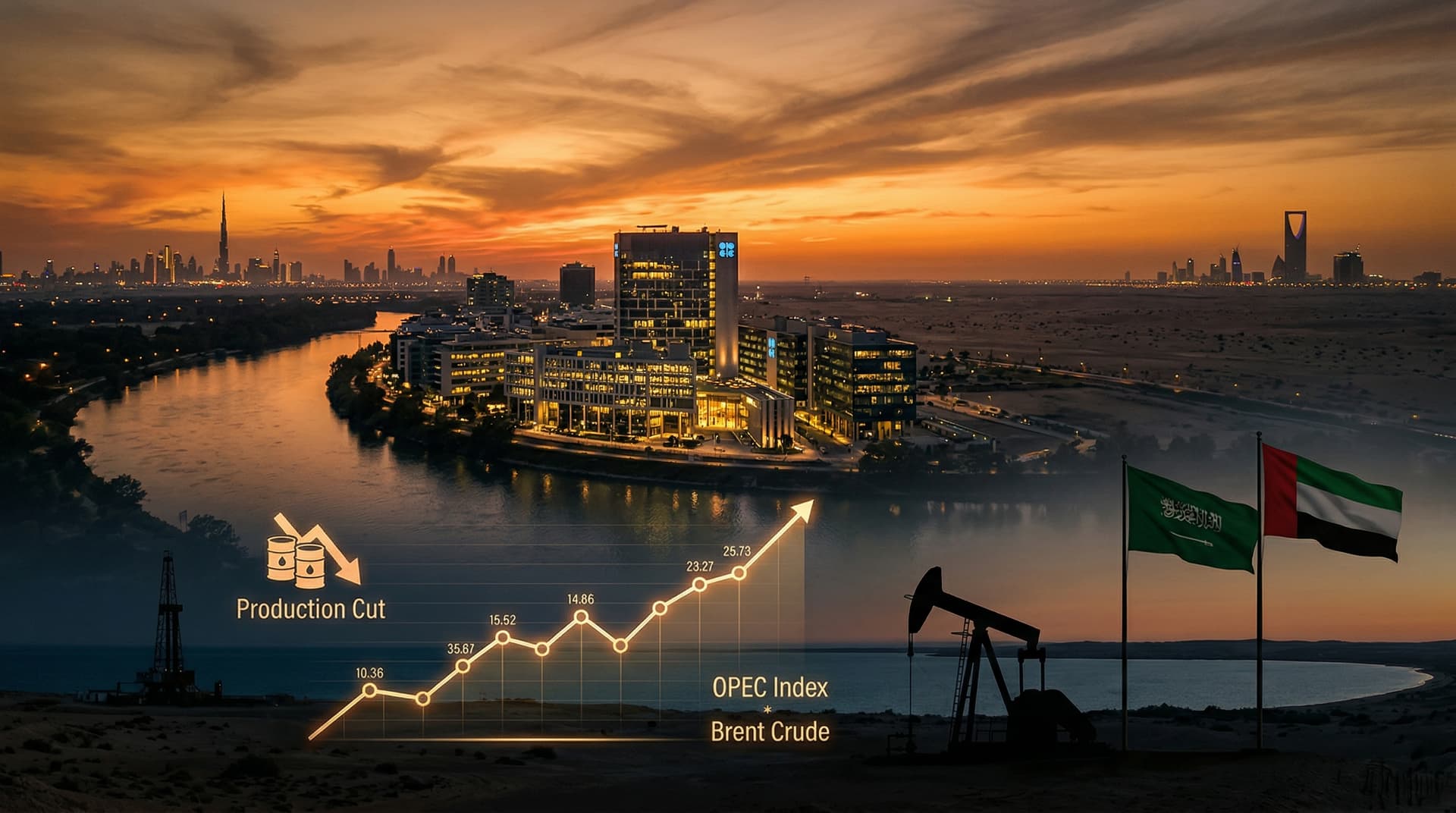
Riyadh/Dubai, October 6, 2023 – In a bold move to counter softening oil prices and geopolitical uncertainties, OPEC+ announced on October 5 voluntary production cuts totaling 2 million barrels per day (bpd), effective from November 2023. The decision, spearheaded by Saudi Arabia and Russia, marks a significant intervention in the global energy market and provides much-needed support to the oil-dependent economies of the Gulf region.
The Details of the Cuts
The cuts are structured as follows:
- Saudi Arabia: Extending its existing 1 million bpd cut.
- Russia: Voluntary reduction of 300,000 bpd.
- Iraq: 211,000 bpd cut.
- United Arab Emirates (UAE): 144,000 bpd reduction.
- Kuwait: 107,000 bpd.
- Kazakhstan: 82,000 bpd.
- Algeria: 51,000 bpd.
These adjustments will be monitored monthly, with the possibility of reversal if market conditions improve. OPEC+ Secretary General Haitham Al Ghais emphasized that the decision was data-driven, citing risks to market stability from slowing demand growth, particularly in China, and rising non-OPEC+ supply.
Oil prices reacted swiftly, with Brent crude surging over 4% to above $88 per barrel in early trading on October 6, while West Texas Intermediate (WTI) climbed past $85. This rally offers relief to Gulf producers who have been grappling with Brent prices hovering around $80-85 in recent weeks, below the fiscal breakeven levels for some members.
Gulf Region's Stake in the Decision
For Saudi Arabia, the world's largest oil exporter, these cuts align with its strategy to defend market share while advancing Vision 2030 diversification efforts. Riyadh has maintained deep cuts since last year to support prices, even as it invests heavily in renewables and tourism. Finance Minister Mohammed Al-Jadaan recently noted that while oil revenues fund ambitious projects, fiscal prudence remains key.
The UAE, through ADNOC, also plays a crucial role. Abu Dhabi's 144,000 bpd cut reflects its commitment to OPEC+ discipline, despite ramping up capacity expansions. UAE Energy Minister Suhail Al Mazrouei has long advocated for proactive supply management. Meanwhile, Kuwait and smaller producers like Algeria benefit from higher prices bolstering budgets strained by post-pandemic recovery.
| Country | Cut (bpd) | Share of Total |
|---|---|---|
| Saudi Arabia | 1,000,000 | 50% |
| Russia | 300,000 | 15% |
| Iraq | 211,000 | 10.5% |
| UAE | 144,000 | 7.2% |
| Others | 345,000 | 17.3% |
| Total | 2,000,000 | 100% |
Broader Market Context
The decision comes against a backdrop of macroeconomic headwinds. Global oil demand growth is projected at around 1 million bpd for 2023 by the International Energy Agency (IEA), down from earlier forecasts due to China's uneven recovery and high interest rates curbing consumption. Non-OPEC+ supply, led by the US, Brazil, and Guyana, is expected to rise by 1.3 million bpd next year, adding pressure.
Geopolitical tensions in the Middle East further complicate the outlook. Ongoing conflicts and shipping disruptions in the Red Sea have kept traders vigilant, though no direct supply impacts have materialized yet. OPEC+ views these cuts as preemptive, ensuring inventories do not build excessively.
Implications for Gulf Economies
Higher oil prices are a boon for the Gulf Cooperation Council (GCC) nations. Saudi Arabia's budget projects an average Brent price of $82.50 for 2023, but sustained levels above $90 could unlock additional fiscal space for mega-projects like NEOM and The Red Sea Project. The UAE, with its sovereign wealth funds, is channeling oil windfalls into AI, space, and clean energy initiatives, including the Mohammed bin Rashid Al Maktoum Solar Park.
However, challenges persist. OPEC+ members face internal pressures; Iraq has exceeded quotas repeatedly, prompting warnings from Riyadh. The UAE has sought higher baselines, a nod to its growing capacity. Balancing unity with national interests will be tested in coming months.
Looking Ahead: Energy Transition and Oil's Future
While OPEC+ focuses on the short term, Gulf states are accelerating energy transitions. Saudi Aramco is investing in blue hydrogen and carbon capture, while ADNOC targets net-zero by 2045 for its operations. The cuts buy time, allowing reinvestment in both hydrocarbons and alternatives.
Analysts from JPMorgan and Goldman Sachs predict Brent could average $85-90 through Q1 2024 if compliance holds. Yet, recession fears and EV adoption loom as downside risks.
In summary, OPEC+'s October 5 decision reaffirms the Gulf's pivotal role in global energy security. As markets digest the news, stakeholders in Riyadh, Abu Dhabi, and beyond will watch compliance and demand closely. For now, the cuts signal resolve amid volatility, stabilizing an industry vital to the region's prosperity.
Gulf N News will continue monitoring developments in the oil market and their impacts on Middle East economies.